
The finance industry is changing at a fast pace due to emerging technologies that affect how organizations operate and interact with clients. Financial institutions are exploring ways to adopt tools that improve decision-making, reduce errors, and streamline processes. Technology is impacting every sector, from banking and investment to insurance and payment systems. Companies are increasingly relying on digital platforms for transactions, data storage, and reporting. This shift allows financial institutions to respond more quickly to market changes. Consumers are also experiencing changes, with online banking, mobile payments, and AI-powered services becoming more common. Security remains a critical concern as more data moves online. Regulations are evolving to ensure safety and transparency, but challenges remain in keeping up with technological developments. Professionals are being trained to understand and leverage these tools effectively. Overall, the intersection of finance and technology is reshaping the way money is managed, investments are made, and services are delivered.
Emerging Finance Technologies
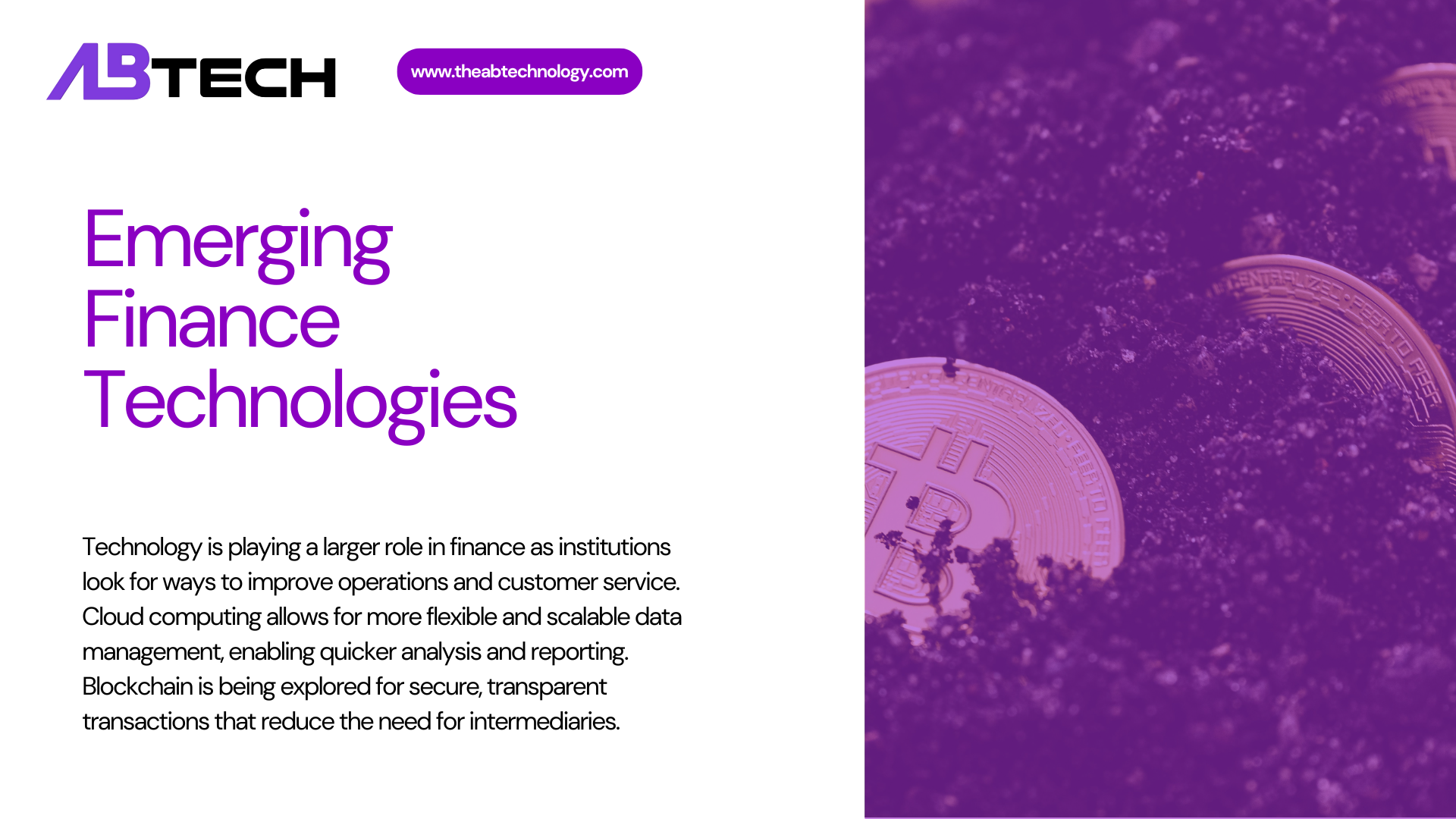
Technology is playing a larger role in finance as institutions look for ways to improve operations and customer service. Cloud computing allows for more flexible and scalable data management, enabling quicker analysis and reporting. Blockchain is being explored for secure, transparent transactions that reduce the need for intermediaries. Cryptocurrencies are introducing alternative methods for transactions and investments, although regulatory clarity is still developing. Machine learning helps in predicting trends and making better investment decisions. Digital payment systems are providing consumers with faster and more convenient options for transactions. The shift to digital tools is also changing workforce requirements, demanding skills in coding, data analysis, and cybersecurity. Financial firms are investing in these technologies to stay competitive and respond to customer expectations. Despite the benefits, challenges remain in integration, staff training, and maintaining system security. Overall, emerging technologies are creating a more connected, fast-moving financial environment.
AI and Machine Learning
Artificial intelligence and machine learning are changing how financial firms work. These systems can quickly analyze large amounts of data to spot patterns and make predictions. They are useful for things like credit scoring, assessing risks, and managing investment portfolios. Machine learning models get better over time, which helps improve the accuracy of forecasts. AI-powered chatbots and virtual assistants are being used to answer customer questions more quickly. Fraud detection systems use AI to flag suspicious activity as it happens. Analysts are relying on these tools to make decisions, reduce repetitive tasks, and improve accuracy. Keeping data secure is still a big concern, so algorithms and systems need regular updates and monitoring. AI also allows firms to offer services that are more tailored to individual customer needs. As more companies adopt these technologies, they are investing in both the right tools and skilled staff to make the most of them.
Blockchain and Digital Currencies
By providing a secure and transparent system that operates without a central authority, blockchain offers a new way to handle financial transactions. Its decentralized design makes records difficult to alter, which helps increase confidence in financial processes. Digital currencies built on this technology create alternative options for payments and investments, often at lower costs than traditional methods. Many financial institutions are exploring how blockchain can streamline international transfers and cut operational expenses. Smart contracts extend these benefits by automatically executing agreements when specific conditions are met, removing the need for intermediaries and speeding up processes. Adoption is still evolving as regulations continue to develop, leaving some uncertainty around widespread use. The system can also strengthen cybersecurity by reducing single points of failure in data storage. Some firms are testing private or hybrid blockchain setups for internal operations. Overall, this technology is helping financial systems become more secure, efficient, and transparent.
Cloud Computing
Cloud computing gives financial firms more flexibility in storing, managing, and analyzing data. It reduces reliance on physical servers and can easily scale to handle growing amounts of information. Cloud platforms also allow teams to access financial data in real time, no matter their location. Security and compliance remain important considerations when using these services. Many firms opt for private or hybrid cloud setups to keep sensitive information protected while still taking advantage of cloud capabilities. Cloud-based data analysis tools can help improve investment decisions and manage risks more effectively. These systems also support mobile banking apps and other digital platforms for clients. By lowering infrastructure costs, cloud computing allows firms to invest resources in other strategic areas. Training staff to use cloud systems properly is essential for success. Over time, cloud adoption is becoming a standard practice across the finance industry.
AI Impact on Finance
Financial services are being transformed by artificial intelligence, which is helping firms manage operations, risks, and customer interactions more effectively. AI powers automated trading systems that can make quick decisions using market trends and historical data. It also strengthens fraud detection by spotting unusual activity in real time. Personalized financial services are becoming more common, giving clients recommendations tailored to their needs. AI can support compliance by monitoring transactions and flagging any irregularities. Predictive analytics help firms anticipate client behavior and respond to market changes. At the same time, challenges remain, including data privacy, transparency in algorithms, and ethical considerations. Many financial institutions are investing in both AI technology and skilled staff to stay competitive. As the technology continues to improve and become more accessible, its role in finance is expected to grow even further.
Automated Trading Systems
Automated trading uses algorithms to buy and sell financial assets at high speed. These systems analyze market conditions and execute trades without manual intervention. Automation can help reduce human errors and improve reaction times in volatile markets. Trading algorithms consider historical data, trends, and patterns to make decisions. Risk management is built into many systems to avoid excessive losses. While automation improves efficiency, it can also amplify market fluctuations if not monitored carefully. Firms continuously refine algorithms to respond to changing market conditions. Regulatory oversight ensures that automated systems operate fairly and transparently. Traders now focus on strategy development and system supervision rather than executing orders manually. The combination of human expertise and automation creates a more responsive trading environment.
Risk Management Tools
AI is helping financial firms detect risks and prevent fraud in real time. Systems can analyze patterns to identify suspicious behavior in transactions. Early detection reduces losses and strengthens trust with clients. Fraud detection tools can adapt to new tactics, improving over time. Risk models help institutions make better lending and investment decisions. AI allows for scenario testing to predict potential financial challenges. Staff can focus on complex cases while AI handles routine monitoring. Security measures must be regularly updated to counter evolving threats. Data privacy is a key concern as sensitive information is analyzed. The integration of AI into risk management is enhancing overall financial stability.
Personalized Financial Services
Personalized financial services use AI to tailor offerings for individual clients. Recommendations for investments, savings, and spending are based on behavior and preferences. Personalized communication improves customer satisfaction and engagement. Data analysis allows firms to anticipate client needs before they arise. Digital tools provide clients with dashboards and insights into their finances. Personalized approaches can increase efficiency by targeting the right services to the right users. Firms need strong privacy measures to maintain trust. Clients are benefiting from more relevant advice and automated suggestions. Personalization also supports better long-term financial planning.
Automation in Finance
Financial institutions are increasingly relying on automation to streamline operations and reduce repetitive work. Tasks like data entry, document processing, and reporting are gradually being handled by automated systems, freeing employees to focus on decision-making and client interactions. These tools also help reduce errors and maintain consistency in routine processes. Banks and lenders are applying automation to activities such as risk assessments and loan approvals. Automated reporting ensures compliance requirements are met accurately and on schedule. Workflow systems make it easier to coordinate automated processes across different departments. Even with these advantages, human oversight is still needed to handle exceptions and maintain quality. System reliability and security remain essential considerations. Over time, automation is becoming a key part of day-to-day operations in the financial sector.
Automation Process in Banks
Banks are automating tasks such as transaction processing and account management. Automation reduces time spent on repetitive work and increases accuracy. Systems are designed to handle routine customer requests efficiently. Employees can focus on complex cases that require judgment and interaction. Automation also supports internal reporting and auditing tasks. Adoption requires staff training and system monitoring to maintain reliability. Banks benefit from faster response times and improved customer experiences. Automation tools continue to evolve to handle more complex operations. Long-term maintenance and updates are necessary for smooth performance. Automation is reshaping how banks manage day-to-day operations.
Loan Approval Systems
Loan and credit approval systems are using automation to speed up the process. Algorithms assess creditworthiness based on multiple data points, reducing manual review. Decisions can be made faster, helping clients access funds more quickly. Automation helps maintain consistency and reduces potential biases. Risk assessment models are built into automated systems to identify potential defaults. Compliance checks are integrated to ensure regulations are met. Customers benefit from a smoother, faster application experience. Employees can focus on complex or exceptional cases. Automation supports better decision-making and operational efficiency. Overall, loan approval automation is improving both speed and accuracy.
Compliance Automation
To reduce errors and save time, many compliance tasks, such as reporting and monitoring, are now automated. Automated systems help firms follow regulations by tracking transactions and flagging unusual activity for review. They also make record-keeping and audits more accurate and efficient. By integrating with other financial systems, automation allows departments to monitor processes more easily. Automated alerts help teams respond quickly when issues arise. Human oversight remains essential to handle exceptions, and systems need regular updates to keep pace with changing regulations. Overall, automating compliance enhances both operational efficiency and institutional integrity.
Technology Benefits and Risks
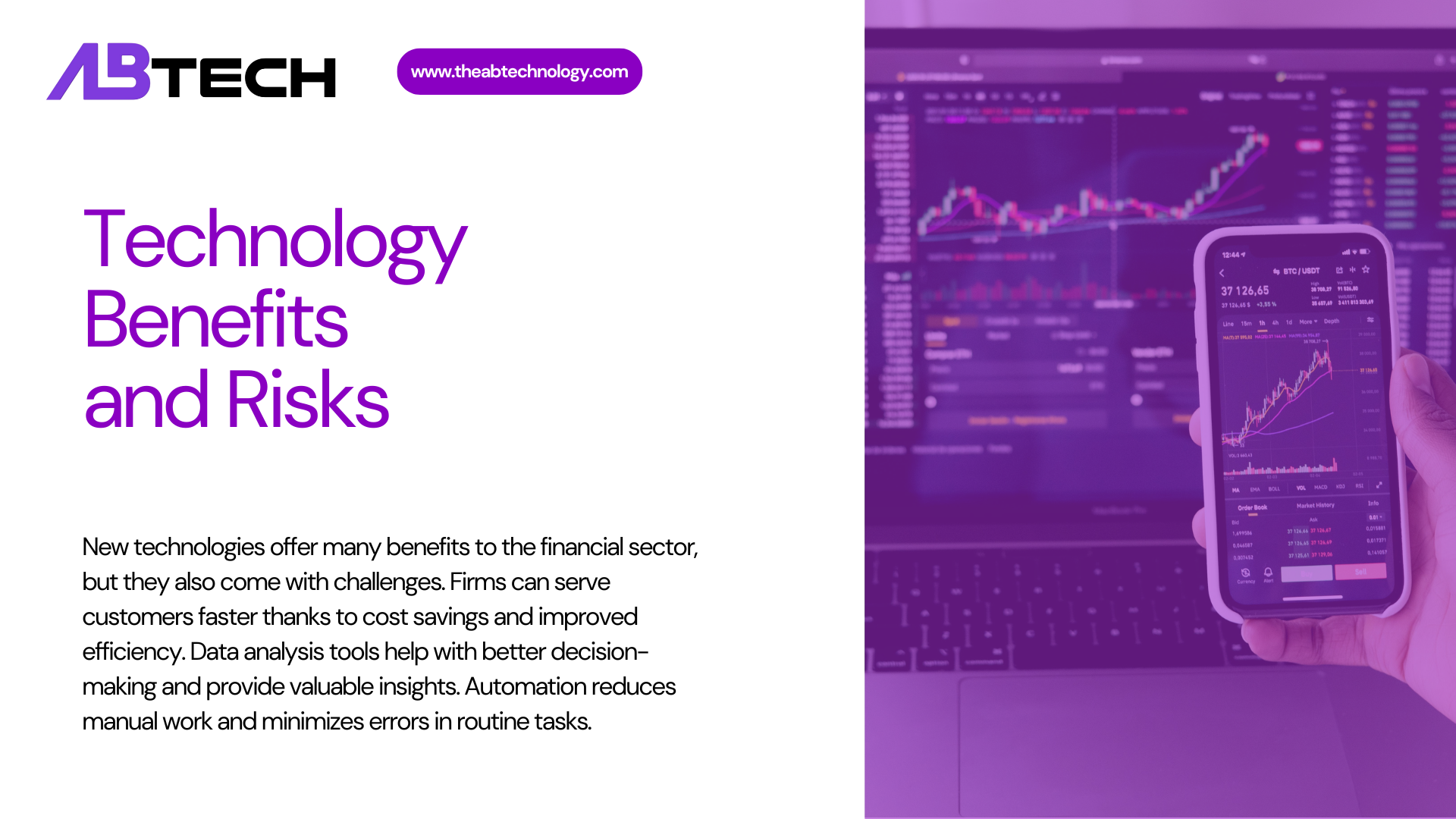
New technologies offer many benefits to the financial sector, but they also come with challenges. Firms can serve customers faster thanks to cost savings and improved efficiency. Data analysis tools help with better decision-making and provide valuable insights. Automation reduces manual work and minimizes errors in routine tasks. At the same time, cybersecurity threats continue to evolve, making security a constant concern. Financial institutions need to invest in both staff training and protective measures. Regulatory compliance is another challenge, requiring ongoing monitoring and adjustments. Relying too heavily on technology can create risks if systems fail or behave unexpectedly. Effective technology use also depends on skilled personnel to manage and maintain systems. For long-term success, firms must find a balance between the benefits of technology and the risks it introduces.
Efficiency and Cost Savings
Technology reduces the time and resources required for financial operations. Automated systems handle repetitive tasks accurately and quickly. Firms can allocate staff to higher-value activities. Process improvements lead to cost reductions and better service quality. Decision-making is faster with data analytics and predictive tools. Customers enjoy quicker responses and more convenient services. Over time, technology lowers operational expenses and improves competitiveness. Efficiency gains are accompanied by a need for staff training. Systems require continuous maintenance to ensure performance. Overall, efficiency benefits are among the most visible impacts of technology.
Cybersecurity Challenges
As more financial processes move online, cybersecurity becomes critical. Data breaches and cyberattacks can have severe consequences. Institutions need strong firewalls, encryption, and monitoring systems. Staff awareness and training are essential to prevent phishing and fraud. Security measures must be updated continuously to match evolving threats. Automated monitoring tools help detect suspicious activity in real time. Regulatory standards often mandate certain cybersecurity protocols. Protecting sensitive client information is a top priority. Cybersecurity failures can damage trust and lead to financial loss. A proactive approach is necessary to maintain safe operations.
Compliance Issues
Financial regulations require accurate reporting and risk management. Non-compliance can result in penalties and reputational damage. Automated systems help track transactions and generate reports consistently. Keeping up with changing laws is a continuous task. Staff need to understand both technology and compliance requirements. Regular audits ensure systems and processes meet standards. Automation can reduce errors, but cannot replace human oversight entirely. Institutions must implement checks and balances to maintain compliance. Technology adoption should always consider regulatory obligations. Compliance remains a central concern alongside efficiency and innovation.
Future Finance Trends
The future of finance is shaped by ongoing technology developments. FinTech solutions are expected to become more advanced and widely adopted. Artificial intelligence and data science will play increasingly important roles in decision-making and service delivery. Digital payment methods will continue to grow in popularity. Risk management and fraud detection will benefit from predictive analytics. Automation will expand across processes, improving speed and accuracy. Regulatory frameworks will evolve to address new technologies. Consumers will expect faster, more personalized services. Financial firms will need to adapt to maintain competitiveness. Long-term success will depend on balancing technology, security, and customer needs.
Next-Gen FinTech
FinTech is developing in tandem with emerging tech trends in the finance industry, such as biometric authentication and quantum computing. These developments provide quicker, safer solutions that satisfy the rising needs of both enterprises and consumers.
AI and Data Growth
AI and data science will continue to influence finance by improving analysis and decision-making. Predictive analytics help anticipate market trends and client needs. Machine learning models support better investment and risk strategies. Automation will expand into areas like compliance, reporting, and customer service. Data science allows institutions to extract insights from large datasets efficiently. Security and privacy measures must evolve alongside AI capabilities. Human oversight remains important to interpret results and make final decisions. AI and data science will be key drivers in shaping future financial services. Adoption will require investment in technology and workforce skills. The industry is moving toward a more data-informed and responsive model.