
How Tech Innovations Shape Care
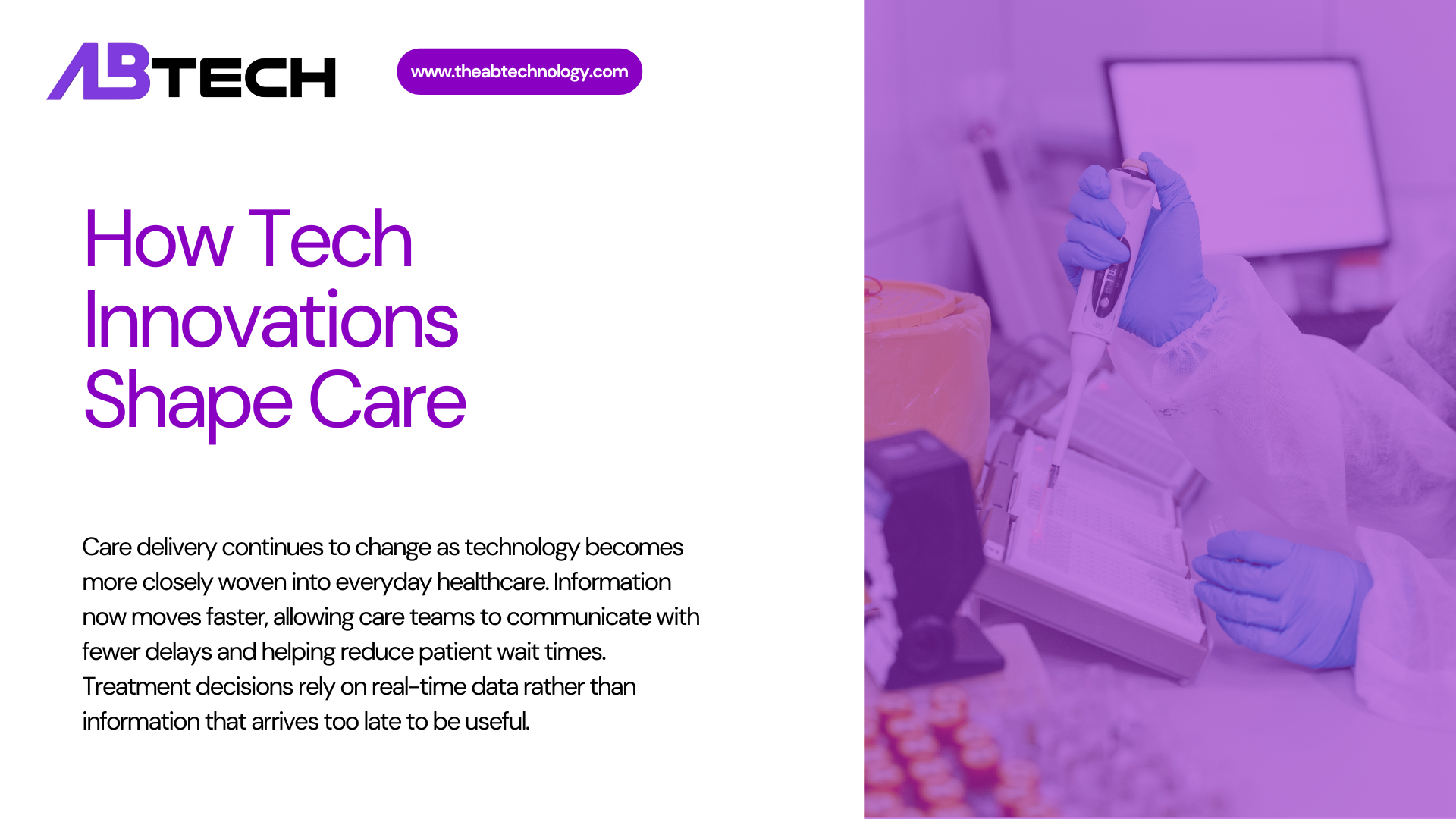
Care delivery continues to change as technology becomes more closely woven into everyday healthcare. Information now moves faster, allowing care teams to communicate with fewer delays and helping reduce patient wait times. Treatment decisions rely on real-time data rather than information that arrives too late to be useful. Patients stay better informed through digital records and timely alerts about their care. Medical staff share access to test results and patient histories, which cuts down on repeated work and miscommunication between departments. Remote monitoring tools allow patients to be followed without constant clinic visits. This makes care easier to adjust when health conditions shift. Digital platforms also make post-discharge follow-up more consistent. Early warning signs are less likely to be missed, which lowers the chance of readmission. Communication among patients, families, and healthcare teams becomes clearer and more reliable. Altogether, these changes help create care that is safer, more coordinated, and easier to manage.
Digital Care Tools
Digital tools support accuracy and speed across many treatment settings. Electronic records reduce handwritten errors and missing details. Automated alerts notify staff about medication schedules and vital changes. Imaging tools support clearer views of internal conditions. Diagnostic software helps highlight patterns that might be missed manually. Treatment plans update quickly as new data appears. Communication platforms allow instant sharing between specialists. Patients gain access to summaries that are easier to understand. Follow-up reminders help support adherence to care plans. Digital tools also support reporting and quality checks. These systems help care teams respond faster. Over time, this leads to more consistent outcomes.
Live Health Tracking
Real-time monitoring allows ongoing insight into patient conditions. Sensors track heart rate, movement, and sleep patterns. Data flows directly to care teams without delays. Changes in readings can signal early warning signs. This allows quicker responses before problems escalate. Patients feel reassured knowing someone is monitoring their status. Home-based tracking reduces unnecessary visits. Care teams review trends rather than single readings. This supports better long-term planning. Alerts help guide timely outreach. Remote tracking supports recovery after procedures. These tools extend care beyond physical facilities.
Emerging Healthcare Technologies
New healthcare technologies continue to gain attention for their potential impact. These tools often focus on diagnosis, treatment support, and patient comfort. Many rely on data analysis and automation. Others focus on physical assistance or visual support. Adoption varies by setting and resources. Some tools start in research environments before wider use. Training plays a key role in safe adoption. Ethical oversight remains part of development discussions. These technologies aim to support professionals rather than replace them. Patients benefit from more precise care options. Systems become better at handling complex cases. Continued research shapes how these tools mature.
AI in Diagnostics
Artificial intelligence supports pattern recognition in large data sets. Diagnostic systems review images, lab results, and records together. This helps flag areas that need closer review. Clinicians remain responsible for final decisions. AI tools assist by reducing manual review time. These systems learn from past cases and outcomes. Accuracy improves as data quality improves. AI helps standardize early screening processes. This supports earlier detection in many conditions. Review speed increases in high-volume settings. These tools support consistency across locations. Ongoing testing ensures safety and reliability.
Surgical Robotics
Robotic systems support precision during complex procedures. Surgeons control movements through guided interfaces. This allows steadier actions and smaller incisions. Recovery times may shorten due to reduced tissue impact. Robotic tools assist with repeatable tasks. Training programs focus on safe operation and oversight. These systems support detailed planning before procedures begin. Visual feedback improves depth perception. Robotics also assists in rehabilitation exercises. Recovery support becomes more structured. Care teams track progress through guided programs. These tools support accuracy and control.
Virtual Care Experiences
Virtual reality and augmented reality support patient education and comfort. Patients view procedures or recovery steps in advance. This helps reduce anxiety before treatment. Visual guides support physical therapy routines. Training simulations support medical education. Patients practice exercises in guided environments. These tools support pain distraction techniques. Visual overlays assist during procedures. Education becomes more interactive and clear. Support continues outside clinic settings. These tools complement traditional care methods. Adoption grows as hardware becomes accessible.
Medical Technology Growth Drivers
Medical technology growth reflects changing needs across healthcare systems. Aging populations increase demand for monitoring and prevention. Chronic conditions require long-term management tools. Data sharing supports coordinated care across providers. Portable devices support daily health awareness. Custom solutions address individual patient needs. Production methods now support personalized devices. Security tools protect sensitive information. These drivers shape how technology evolves. Investment follows proven outcomes. Regulation guides safe development. Growth continues through steady demand.
Smart Health Devices
Wearable devices support daily health tracking. Users monitor activity, sleep, and vital signs. Data encourages awareness of lifestyle patterns. Care teams review trends over time. Alerts notify users of unusual readings. Devices support preventive habits. Long-term tracking supports early detection. Data sharing remains user-controlled. Devices support independence in daily care. Adoption grows through simplicity. These tools support ongoing engagement. Preventive care becomes more accessible.
3D Medical Printing
3D printing supports custom medical solutions. Prosthetics match individual anatomy. Implants fit more precisely. Production times shorten for custom parts. Materials continue to improve in durability. Planning uses detailed imaging data. Custom tools support complex procedures. Costs vary by application. Research supports broader use cases. Printing supports rapid adjustments. Patients benefit from improved fit. This supports comfort and function.
Secure Health Records
Blockchain supports secure medical record management. Data remains consistent across systems. Access permissions control who views information. Records resist unauthorized changes. Transparency supports trust in data sharing. Patients track access history. Systems reduce duplication of records. Interoperability supports coordinated care. Security remains a primary focus. Adoption depends on standards alignment. Testing supports reliability. Data protection remains central.
System Level Healthcare Change
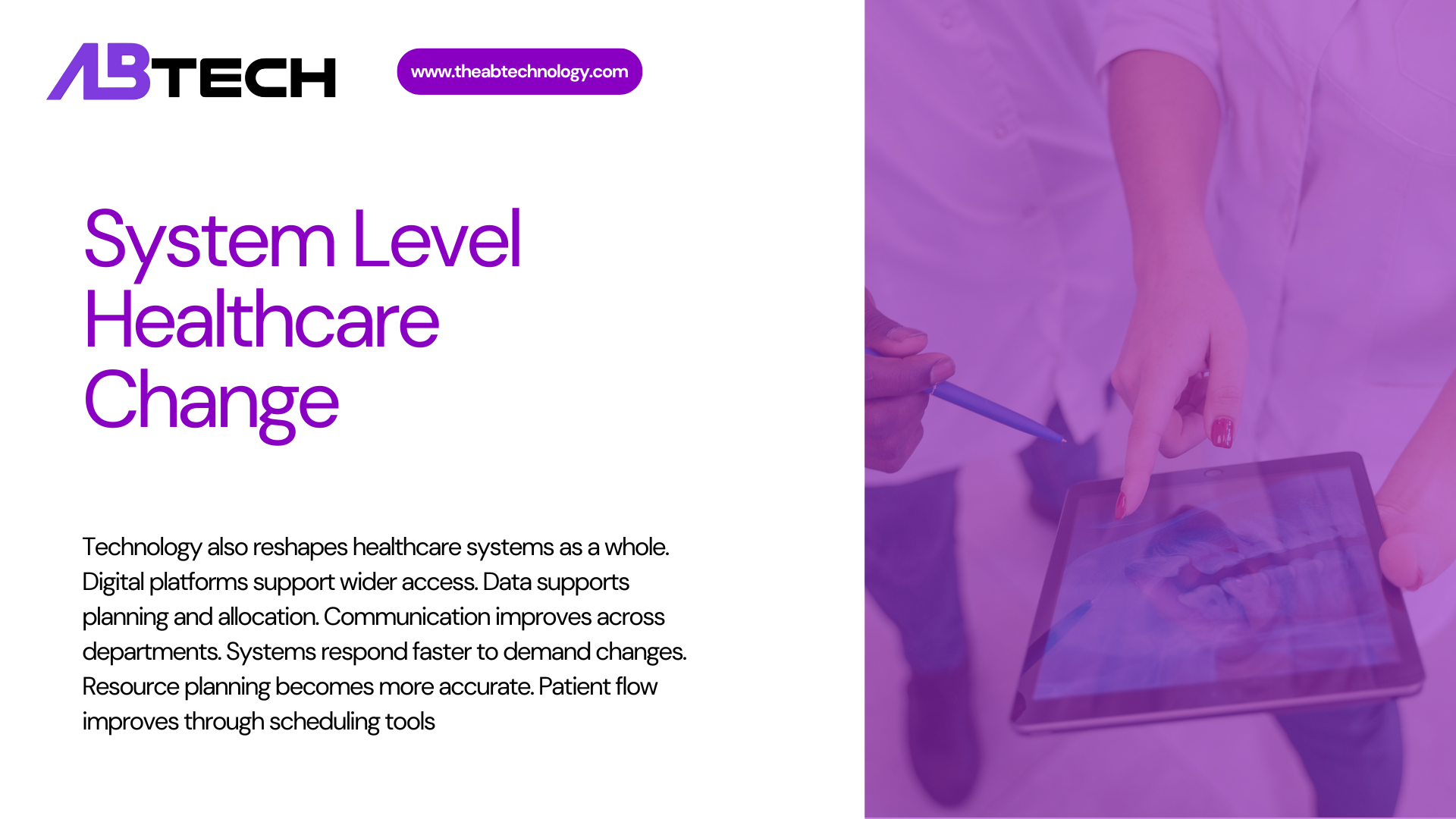
Technology also reshapes healthcare systems as a whole. Digital platforms support wider access. Data supports planning and allocation. Communication improves across departments. Systems respond faster to demand changes. Resource planning becomes more accurate. Patient flow improves through scheduling tools. Reporting supports quality monitoring. Digital access supports rural communities. Centralized data supports oversight. Systems adapt through feedback loops. Coordination improves across care levels. These changes support sustainability.
Virtual Care Access
Telemedicine expands access to care services. Patients consult providers from home. This reduces travel barriers. Scheduling becomes more flexible. Follow-up visits become easier. Chronic care monitoring continues remotely. Mental health support becomes more accessible. Providers reach wider populations. Documentation integrates into records. Care continuity improves across visits. Access expands without new facilities. Digital care becomes routine.
Hospital Data Planning
Predictive analytics supports resource planning. Hospitals forecast patient volume trends. Staffing aligns with expected demand. Supply management becomes more accurate. Data supports emergency preparedness. Bed usage planning improves. Scheduling adjusts proactively. Financial planning uses usage trends. Patient flow reduces bottlenecks. Care delivery becomes more stable. Planning supports safety goals. Data guides long-term strategy.
Patient Experience Improvements
Technology shapes how patients experience care. Digital access supports transparency. Scheduling becomes simpler. Communication feels more direct. Information becomes easier to understand. Support extends beyond visits. Feedback tools capture patient concerns. Care feels more personal. Access improves across locations. Wait times are reduced through planning. Education supports informed choices. Engagement increases through digital touchpoints. Experience improves through consistency.
Patient Health Apps
Patient-facing apps support daily care tasks. Users track appointments and medications. Educational content supports understanding. Reminders support adherence. Secure messaging supports questions. Data sharing remains optional. Apps support symptom tracking. Feedback flows to care teams. Personal dashboards support clarity. Engagement increases through convenience. Support remains ongoing. Apps support active participation.
Online Care Portals
Patient portals centralize care information. Records remain accessible anytime. Test results appear quickly. Messaging supports follow-up questions. Appointment scheduling becomes simple. Billing information remains clear. Education resources support learning. Access supports shared decision-making. Care coordination improves. Portals support continuity. Patients feel informed. Support remains available on demand.
Technology Adoption Risks
Adopting healthcare technology brings challenges. Data security remains a major concern. Systems require regular updates. Training demands time and resources. Workflow changes affect staff routines. Costs vary by scale. Compatibility issues arise across platforms. User adoption varies by comfort level. Oversight ensures safe use. Technical failures require backup plans. Policy guides responsible use. Balancing speed with safety remains ongoing.
Health Data Security
Cybersecurity risks threaten patient information. Attacks target healthcare systems frequently. Protection requires constant monitoring. Encryption supports data safety. Staff training reduces human error. Access controls limit exposure. Regular testing supports preparedness. Response plans guide recovery. Regulations shape security standards. Investment supports defense measures. Trust depends on protection. Security remains a shared responsibility.
Staff Training Barriers
Digital systems require new skills. Training programs demand time. Staff adjust to new workflows. Resistance may arise during change. Support reduces frustration. Clear guidance supports confidence. Leadership plays a key role. Feedback improves training design. Gradual rollouts reduce stress. Peer support encourages learning. Skills develop over time. Training supports safe adoption.
Future Healthcare Technology Outlook
Healthcare technology continues to progress through research and practice. Studies guide safe development. Feedback shapes refinement. Collaboration supports shared learning. Policy guides responsible use. Education prepares future professionals. Systems remain adaptable. Patient needs guide priorities. Ethical review remains central. Data quality shapes outcomes. Progress builds steadily. The future reflects informed growth.
Research Driven Progress
Research supports evidence-based development. Trials test safety and outcomes. Data informs best practices. Feedback refines tools. Collaboration spans disciplines. Funding supports long-term studies. Results guide adoption decisions. Transparency supports trust. Research reduces uncertainty. Knowledge grows through shared findings. Standards emerge through evidence. Research shapes direction.
Preparing for Change
Healthcare organizations plan for ongoing change. Leadership supports readiness. Training prepares staff. Infrastructure supports flexibility. Policies guide adoption. Patient input informs design. Evaluation supports improvement. Communication supports alignment. Gradual change reduces disruption. Planning supports resilience. Systems remain adaptable. Preparation supports long-term success.