
Fintech is transforming the way people handle money, from how they save and spend to how they invest and grow their wealth. By combining technology and finance, it develops solutions that make money management simpler and more accessible. Over the past ten years, fintech has rapidly developed, going from niche apps to popular platforms that are used daily by millions of individuals. Mobile apps, digital wallets, and online investment tools are already standard financial practices. As a result of this shift, investors and consumers alike now have greater financial power, which has also opened up new options.
The rise of fintech has also put traditional banks and financial institutions to the test, forcing them to either innovate or risk falling behind. Fintech appeals to many investors because it combines the stability of finance with the potential for rapid growth, and its global reach keeps expanding, simplifying, and enhancing the security of digital payments and cross-border transactions. Growth is fueled by innovation, but it also presents problems with cybersecurity, data privacy, and legislation. Financial technology’s continuous development is not slowing down, and as the industry develops, it will change how individuals invest in the digital era.
Fintech Investing and Its Growing Impact
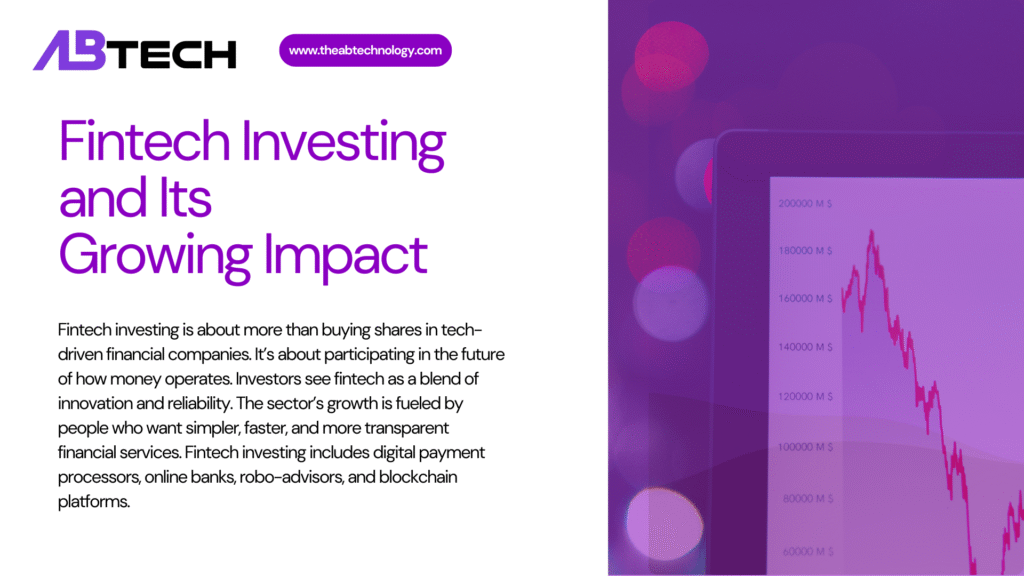
Fintech investing is about more than buying shares in tech-driven financial companies. It’s about participating in the future of how money operates. Investors see fintech as a blend of innovation and reliability. The sector’s growth is fueled by people who want simpler, faster, and more transparent financial services. Fintech investing includes digital payment processors, online banks, robo-advisors, and blockchain platforms. Each area helps reshape traditional finance in unique ways. The biggest opportunity lies in the combination of scalable technology and growing global demand. Many early investors in companies like PayPal and Square saw strong long-term gains. However, fintech investments come with risks tied to regulations and evolving technologies. Firms that maintain trust, ensure security, and adapt to user needs tend to perform best. As more financial activity moves online, fintech’s potential will keep expanding. Those who understand its rhythm today are positioning themselves well for the financial systems of tomorrow.
Key Sectors Driving Fintech Growth
Fintech covers a wide range of sectors, each adding to its momentum. Payment platforms simplify transactions for people and businesses worldwide. Companies like PayPal, Stripe, and Square make it easy to send or receive money without a bank visit. Neobanks such as Chime and Revolut are transforming banking by offering low-fee accounts and sleek digital interfaces. Peer-to-peer lending systems lessen reliance on traditional banks by bringing together investors and borrowers directly. Anyone with a smartphone can invest thanks to wealth management applications like Betterment and Robinhood. Blockchain and cryptocurrency continue to grow, offering decentralized ways to move and store value. Insurtech streamlines insurance claims and policy management, while regtech helps firms follow complex regulations efficiently. Each sector shows how fintech is broadening financial access and improving efficiency. As innovation accelerates, these areas are beginning to overlap, forming a connected digital financial ecosystem.
How Investors Evaluate Fintech Companies
Investors assess fintech firms by looking at innovation, scalability, and trust. They prefer companies that solve real financial problems with technology that can grow quickly. Metrics like transaction volume, revenue growth, and user retention reveal long-term potential. Security and compliance are also key, as fintech operates in a heavily regulated space. Startups that handle data responsibly and comply with laws build stronger reputations. Partnerships with banks or major payment providers also help signal stability. Leadership teams with both financial and technical expertise tend to attract investor confidence. User experience is another major factor since people expect easy, reliable, and intuitive interfaces. Companies that blend creativity with reliability often stand out. Evaluating fintech is about spotting both growth potential and resilience in a fast-changing industry.
Exploring the Different Types of Fintech
Fintech includes several types of services that make financial management faster and more accessible. Digital payments are the most common, powering daily transactions through apps like Venmo and Apple Pay. Personal finance tools such as Mint or YNAB help people manage budgets, track expenses, and reach savings goals. Lending fintechs have changed how individuals and small businesses get credit by offering faster approvals and fairer rates through data analysis. Wealth management fintechs, including robo-advisors, allow users to invest automatically with personalized portfolios. Insurtech improves how people buy and manage insurance by cutting paperwork and increasing transparency. Blockchain-based fintech provides secure, traceable transactions without relying on traditional systems. Regtech supports compliance in an increasingly complex global environment. Together, these types of fintech form an ecosystem that supports innovation and inclusion. By merging technology with accessibility, fintech helps people everywhere take control of their finances.
Examples of Fintech Companies in Action
Several leading companies show how fintech continues to transform global finance. PayPal remains one of the most familiar names, expanding from online payments to full financial services. Stripe powers online businesses with its streamlined payment infrastructure. Square helps small merchants process payments through easy-to-use technology. Neobanks like Revolut and Chime have proven that banking can exist entirely online without physical branches. Robinhood changed retail investing with commission-free trading and an intuitive interface. Coinbase brought cryptocurrency to a wider audience with a secure platform. Each of these companies demonstrates how technology and finance can come together to simplify lives and expand access to money management tools. As competition increases, these firms continue to evolve, pushing boundaries once set by traditional institutions. Their success stories highlight how fintech redefines trust, convenience, and accessibility in finance.
What’s Next for the Industry
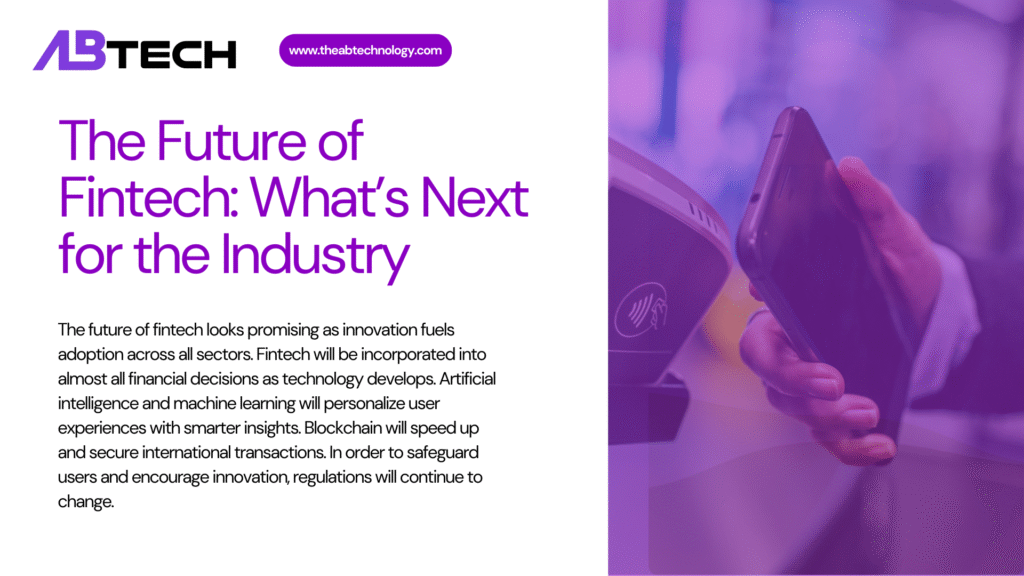
The future of fintech looks promising as innovation fuels adoption across all sectors. Fintech will be incorporated into almost all financial decisions as technology develops. Artificial intelligence and machine learning will personalize user experiences with smarter insights. Blockchain will speed up and secure international transactions. In order to safeguard users and encourage innovation, regulations will continue to change. Traditional banks are likely to work with fintech firms instead of competing against them, creating a more collaborative financial landscape. Ethical and sustainable finance will play a bigger role as fintech companies adopt responsible practices. As smartphone use continues to rise, emerging countries in Asia, Africa, and Latin America are exhibiting significant promise. It is anticipated that fintech will become a seamless part of everyday life, simplifying financial tasks to the level of using an app. Rather than being replaced by AI, fintech will be enhanced by it, creating smarter and more adaptable systems.
How AI and Automation Will Shape Fintech
Artificial intelligence and automation are transforming fintech operations. AI helps detect fraud, analyze spending behavior, and improve loan approvals in real time. Automation simplifies repetitive processes such as identity verification and transaction monitoring. Chatbots now handle customer inquiries efficiently, providing instant responses at any hour. Machine learning models can predict risks and tailor investment recommendations for users. These tools help fintech companies operate faster and make better decisions. Still, transparency and ethical data use are critical to maintaining public trust. Fintech firms that find the right balance between innovation and responsibility will set the standard for the future. Fintech is becoming more intelligent, precise, and user-focused than ever, thanks to AI.
Challenges That Could Shape the Future of Fintech
Although fintech is expanding quickly, it still confronts significant obstacles that may influence its course in the years to come. Data security is one of the main issues. As more financial systems go digital, the risk of cyberattacks rises. Regulations are another major factor, with governments still trying to find the right balance between protecting consumers and encouraging innovation. Fintech companies that rely on transaction volume may also be impacted by economic developments such as inflation and interest rate increases. Because individuals need to be sure that their money and information are secure, trust is crucial. Startups may find it more difficult to grow if there is a lack of qualified personnel in compliance and technology. Uneven internet access around the world also limits fintech’s ability to reach certain communities. Tackling these issues will require cooperation between regulators, tech innovators, and financial institutions. Companies that prioritize security, transparency, and education will be better positioned to thrive. Addressing these hurdles is essential to building a strong and sustainable future for fintech.
Global Opportunities from Fintech Innovation
Fintech is creating new opportunities worldwide, especially in regions that were once underserved. As internet access and smartphone use expand, more people are joining digital financial systems for the first time. Small businesses are scaling faster, farmers are accessing microloans, and remote communities are participating in digital economies. Fintech is using blockchain networks and mobile payments to promote international trade, entrepreneurship, and job creation. Countries in Asia and Africa are leading the shift with mobile-based platforms that serve millions. International investors are funding fintech startups that promote inclusion and economic empowerment. Additionally, governments are collaborating with fintech companies to decrease poverty and increase financial literacy. These partnerships are contributing to the development of more robust and inclusive economies. Fintech proves that innovation is not only about convenience but about giving people real access to financial progress.
How Fintech Is Expanding Access to Financial Inclusion
One of fintech’s biggest achievements is expanding financial inclusion. In many developing regions, banks struggle to reach rural or low-income populations due to cost and infrastructure limits. Fintech fills this gap with digital tools that are affordable and easy to use. Mobile wallets let people send, save, and borrow money without visiting a branch. Digital lenders use alternative data, such as payment history or phone activity, to assess creditworthiness. These resources assist families with emergency management, school funding, and small business startups. Digital banking is helping women, in particular, become more financially independent. Financial inclusion strengthens communities by keeping money circulating locally and supporting economic growth. Fintech’s goal of enabling universal access to money is becoming increasingly more important as it develops.