
Technology has completely changed the way real estate works, affecting every part of the process from searching to closing a deal. Buyers no longer need to rely on printed listings or in-person visits to find a home. Digital platforms make it possible to compare hundreds of properties quickly and easily. Virtual tours and video walkthroughs allow people to explore homes without leaving their current location. Paperwork that once took days to complete can now be done securely online. Agents use AI tools to identify potential buyers and predict property values with more accuracy. Smart home devices are influencing buyer preferences, making certain features more desirable. Communication between buyers, sellers, and agents is faster thanks to chatbots and virtual assistants.
Investors and developers have access to real-time market data for better decision-making. Emerging technologies like drones, AR, and modular construction are improving marketing and building efficiency. The way people experience and manage properties is changing at a rapid pace. Transparency, speed, and accessibility have all improved because of these technological tools. The industry is no longer limited by geography or traditional practices. Everyone involved, from first-time buyers to experienced developers, benefits from these innovations. Overall, technology is reshaping real estate into a more connected and data-driven environment, making the process smoother and more informed for everyone.
Technology Changed Real Estate
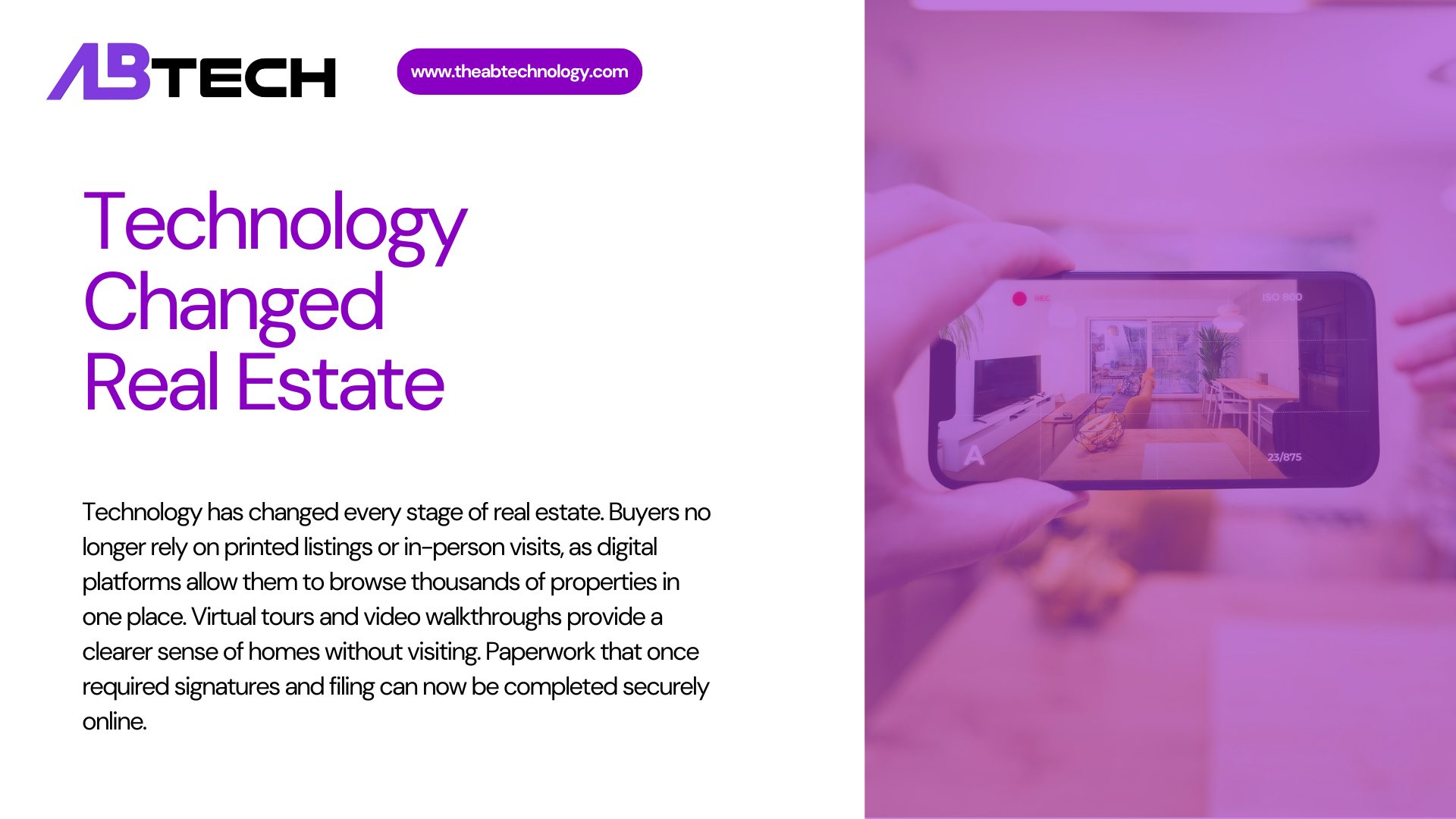
Technology has changed every stage of real estate. Buyers no longer rely on printed listings or in-person visits, as digital platforms allow them to browse thousands of properties in one place. Virtual tours and video walkthroughs provide a clearer sense of homes without visiting. Paperwork that once required signatures and filing can now be completed securely online. Agents communicate faster through email, chat, and scheduling tools, while listings are updated in real-time. Buyers can compare properties easily and save preferences, and agents can track market trends digitally. These changes make the process faster, more transparent, and accessible, allowing clients to feel informed and prepared when making decisions.
Online Listings Changed Searching
Before online listings, searching for a home involved visiting multiple offices and relying on word of mouth. Today, property portals allow buyers to filter by price, location, and amenities. Agents upload photos, floor plans, and detailed descriptions for easy access. Users can save favorite properties and receive alerts when listings change. This reduces wasted time and travel while giving a more complete view of the market. Search algorithms match buyers with properties that meet their preferences. Buyers can also read reviews about neighborhoods or buildings. This provides context beyond the property itself. Access to online data improves negotiation and decision-making. Overall, online listings make property searching more convenient and informative.
Virtual Tours Became Standard
Virtual tours allow people to walk through a property digitally. Video walkthroughs show the flow of space, natural lighting, and room sizes. This feature saves time for both buyers and agents. International or distant buyers can explore homes without traveling. The tours can highlight features that photos might not capture. Agents can record narrated tours explaining property details. Virtual reality tools are being used in some markets to give a full 3D experience. Walkthroughs can be revisited multiple times for better understanding. These tools help buyers feel more confident in their choices. Sellers benefit because their homes can reach a wider audience faster.
Paperwork Moved Online
Digital document management replaced stacks of forms and manual filing. Contracts, disclosures, and inspections can be uploaded securely. Electronic signatures are legally recognized and save time. Automated reminders reduce the chance of missed deadlines. Cloud-based systems allow agents and clients to collaborate in real-time. This reduces errors and ensures consistency. Transaction records are easy to retrieve for audits or future references. Notifications keep all parties informed of updates or approvals. Property transactions can progress faster without unnecessary delays. The move to digital has lowered administrative burdens significantly.
Technology Reshaping Market
Technology has changed how real estate is bought, sold, and managed. Smart contracts make agreements faster and reduce the chance of disputes. AI tools help agents find potential buyers and set fair prices. Virtual assistants and chatbots answer questions quickly and keep communication flowing. Data analytics can show which neighborhoods are gaining popularity, helping agents provide more personalized advice. Tracking offers and responses online makes the process more transparent. Investors can access real-time market information to make informed decisions. Tenants can pay rent and submit maintenance requests through online portals. Property managers can monitor buildings remotely to maintain safety and efficiency. Digital tools make experiences more consistent for everyone involved. Overall, decisions are made with better information, the market moves faster, and managing properties without being on-site is easier than ever.
Smart Contracts Speed Transactions
Smart contracts are self-executing digital agreements. They verify conditions automatically and reduce the need for middlemen. Payments can be released instantly after approval. Documentation is stored securely and can be accessed by all parties. This reduces the risk of fraud or errors. Legal compliance can be embedded into contracts. Agents spend less time on repetitive administrative tasks. Buyers and sellers gain confidence in the process. Transactions that once took weeks can finish in days. This increases overall efficiency and trust in property dealings.
AI Helps Agents
Artificial intelligence tools analyze listings, pricing, and buyer behavior. They help agents predict which properties will sell quickly. AI identifies leads that are more likely to convert. Pricing models consider multiple data points for better accuracy. Agents can focus on high-value tasks instead of manual research. AI systems can also suggest renovations or staging tips for sellers. Buyers get tailored recommendations based on preferences. The tools provide insights into market trends for more informed decisions. Agents benefit from time savings and more precise guidance. This strengthens the quality of service clients receive.
Virtual Assistants Simplify Communication
Virtual assistants handle scheduling, reminders, and inquiries. They respond to common questions instantly. Buyers can book showings online without direct agent involvement. Tenants can report issues using automated systems. These tools improve response times and reduce errors. Agents can focus on tasks that require personal attention. Communication is logged and easily reviewed. Virtual assistants can operate 24/7, supporting clients across time zones. Automation reduces missed opportunities and increases satisfaction. Overall, virtual assistants improve the speed and quality of interactions.
AI and Machine Learning
AI and machine learning are used to predict trends and value properties. They can forecast neighborhood growth and price changes. AI models analyze historical data for more precise appraisals. Developers can plan budgets and timelines with better accuracy. Investors identify potential risks and high-return opportunities. AI can suggest optimal layouts or designs for new projects. Machine learning detects patterns that humans might miss. Predictive analytics helps with long-term planning and investments. Agents can provide more data-driven recommendations to clients. Technology improves efficiency in property management and development. Decision-making is enhanced without requiring specialized expertise. The reliance on AI is increasing steadily in many real estate tasks.
AI Improves Valuation
AI models process sales, location, and market data. They identify comparable properties and predict fair market value. Appraisals are more accurate and consistent. This reduces errors and disputes. Buyers and sellers can make more confident offers. Agents have a stronger foundation for negotiations. Predictive tools can flag properties with high potential for appreciation. Valuation models can be updated in real-time. This increases transparency and reduces uncertainty. Overall, AI gives a clearer picture of property worth.
Machine Learning Finds Trends
Machine learning looks for emerging patterns in markets. It identifies growing neighborhoods or declining areas. Investors can adjust portfolios based on real-time insights. Agents gain a deeper understanding of supply and demand. Predictive models help prevent overpricing or underpricing. Trends in rental or sales behavior become easier to spot. Developers can anticipate market needs before construction begins. Machine learning improves long-term planning for investors. This reduces risks and increases returns. Data-driven insights make real estate decisions more reliable.
AI Supports Developers
AI can forecast construction costs and schedules. It simulates project outcomes to minimize delays. Developers can analyze feasibility and potential returns quickly. Budget overruns are less likely with predictive modeling. AI assists in planning layouts, floor plans, and energy efficiency. Project management software uses AI for task prioritization. Developers monitor progress and identify bottlenecks early. Risk assessment improves through data modeling. These tools reduce uncertainty in complex projects. Overall, AI provides practical guidance in property development.
Smart Home Technology

Smart devices in homes are becoming highly desirable. Thermostats, lighting, and security systems can be controlled remotely. These features reduce energy costs and increase convenience. Voice control systems are especially popular among buyers. Smart appliances provide real-time monitoring of usage. Homes with smart technology often have higher resale value. Tenants appreciate remote access for safety and comfort. Property managers can track energy and security systems efficiently. Buyers expect modern technology as part of home packages. Developers increasingly integrate smart features in new builds. Smart home tech is influencing purchasing decisions. It also promotes sustainability through better energy management. Homes with these features stand out in competitive markets. The demand for connected living continues to grow.
Smart Thermostats and Lighting
Smart thermostats adjust temperatures automatically to save energy. Lighting systems can be programmed or controlled by apps. These systems improve comfort and reduce costs. Homeowners can monitor usage remotely. Alerts notify users of unusual activity. The technology is simple to install and easy to use. It adds modern convenience without heavy maintenance. Energy-efficient homes attract buyers interested in lower utility bills. Remote control options improve day-to-day living. Over time, smart systems pay for themselves. This technology is no longer a luxury but an expectation.
Voice-Controlled Homes
Voice-activated devices allow hands-free control of lights, appliances, and security. This is convenient for multitasking or accessibility needs. Buyers often see these systems as a sign of a modern home. Voice systems can also integrate with thermostats and entertainment systems. They enhance convenience without adding complexity. Many buyers value automation that improves daily routines. The technology is intuitive and easy for guests to use. Voice control can also support home security systems. Homes with these features appeal to tech-conscious buyers. Integration with existing devices is simple and practical..
Smart Features Increase Value
Properties with smart technology often sell faster. Buyers perceive them as more modern and desirable. Resale value can increase because of energy efficiency and convenience. Smart security systems enhance safety, appealing to families. Developers are adding these features to stay competitive. Even small upgrades like smart locks can improve attractiveness. Tenants are willing to pay more for smart-enabled apartments. Marketing properties with technology highlights can capture attention quickly. Smart systems can reduce maintenance costs over time. Overall, technology contributes to both financial and functional benefits.
VR and AR for Sales
Virtual and augmented reality tools improve property marketing. VR allows immersive tours from anywhere. AR helps buyers visualize furniture, layout changes, and renovations. Buyers can experiment with design ideas digitally before committing. Agents can reach international buyers with these technologies. These tools save time and reduce the need for physical visits. VR can also simulate different lighting or decor options. AR apps help with staging without moving furniture. Technology improves engagement and buyer confidence. Agents can showcase properties in creative ways to attract interest. Virtual tools are becoming standard in competitive markets.
3D Virtual Tours
3D virtual tours replicate walking through a property digitally. Buyers experience space and layout more realistically than static images. Multiple tours can be explored in one session. Remote buyers can participate fully in the property viewing. Tours can include interactive features like opening doors or zooming in. This saves time for both parties. Agents can reach clients who cannot travel easily. Tours are accessible from computers or mobile devices. The experience can highlight unique features of the home. 3D tours improve transparency and buyer confidence.
AR Visualizes Layouts
Augmented reality allows buyers to place virtual furniture in rooms. They can test design changes or remodeling ideas before buying. This helps with planning and reduces uncertainty. Clients see potential without expensive renovations. Agents can show upgrades digitally to improve appeal. AR apps are easy to use and widely available. Buyers engage more with the property and can make informed decisions. It increases interest in properties that might otherwise seem plain. AR supports interactive marketing without physical changes. This makes the buying process more engaging.
Agents Market with VR
Real estate agents use VR to attract buyers. It allows creative presentations for multiple properties. VR can simulate different lighting or seasonal changes. Buyers can visit several homes in one session virtually. Agents can provide narrated experiences highlighting unique features. This approach improves engagement and marketing reach. It also differentiates properties in competitive markets. Virtual tours reduce the need for multiple in-person visits. Technology creates more informed buyers. Overall, VR strengthens the ability of agents to showcase homes effectively.
Emerging Real Estate Technology
Several new technologies are shaping the future of real estate. Blockchain can secure transactions and reduce fraud. Drones capture aerial photography for marketing or inspections. Modular and 3D-printed homes speed up construction. Investors monitor real-time data for better decisions. Technology supports sustainability through energy and resource tracking. Developers can plan projects with more precise forecasting. Buyers gain more transparency and confidence. Property managers track buildings and tenants digitally. Mobile applications simplify tasks for buyers, sellers, and tenants. The next few years will see more integration of these technologies. Markets are evolving quickly as adoption grows. Companies are exploring more ways to make processes faster and safer. These tools create new opportunities without relying on physical presence.
Blockchain Reduces Fraud
Blockchain creates secure records for transactions. Each step is verified and immutable. This reduces the risk of tampering or errors. Buyers and sellers have confidence in the process. Smart contracts can automate payments and approvals. The system improves transparency between all parties. Historical records are easy to verify. It also helps with compliance with regulatory requirements. Blockchain increases trust in digital transactions. This could become a standard practice in future real estate deals.
Drones Aid Marketing
Drones capture aerial views of properties and surroundings. They provide unique perspectives not possible with ground photography. This improves marketing material for listings. Property inspections can also use drones to reach difficult areas. Developers can survey sites efficiently. Buyers see the property context clearly, including landscape and amenities. Drones reduce the need for costly equipment and time-intensive photography. Marketing materials become more engaging with aerial footage. Drones improve transparency in property conditions. They provide insights that help buyers and investors.
Modular and 3D Homes
Modular homes are pre-built sections assembled on-site. Construction is faster and often more cost-effective. 3D-printed homes allow precise designs with less material waste. Developers can experiment with unique layouts quickly. These methods reduce labor and construction delays. Sustainability is improved through controlled processes and materials. Buyers can move into completed homes sooner. Project planning is simplified with predictable timelines. Modular and 3D techniques support affordable housing initiatives. The trend is gaining attention for its practicality and speed.