
Technology continues to shape manufacturing by improving how products are planned, produced, and delivered across modern industrial systems. Manufacturing operations rely more on digital tools to manage production flow, quality checks, and equipment performance. These tools help teams respond faster to production demands and shifting market needs. Data plays a central role in guiding daily decisions on the factory floor. Digital systems support better visibility across supply chains and production schedules. Many manufacturers focus on connected processes that reduce delays and material waste.
Technology adoption supports consistency across large production runs. Workforce roles change as digital tools take over repetitive tasks. Skilled workers spend more time on planning, monitoring, and problem-solving. Production environments become safer through automated monitoring systems. Training methods change with the use of virtual environments and simulations. Manufacturers seek long-term stability through smarter systems rather than short-term gains. These trends reflect gradual progress built on practical needs. Manufacturing continues to adapt as technology becomes part of daily operations.
AI and Machine Learning Impact
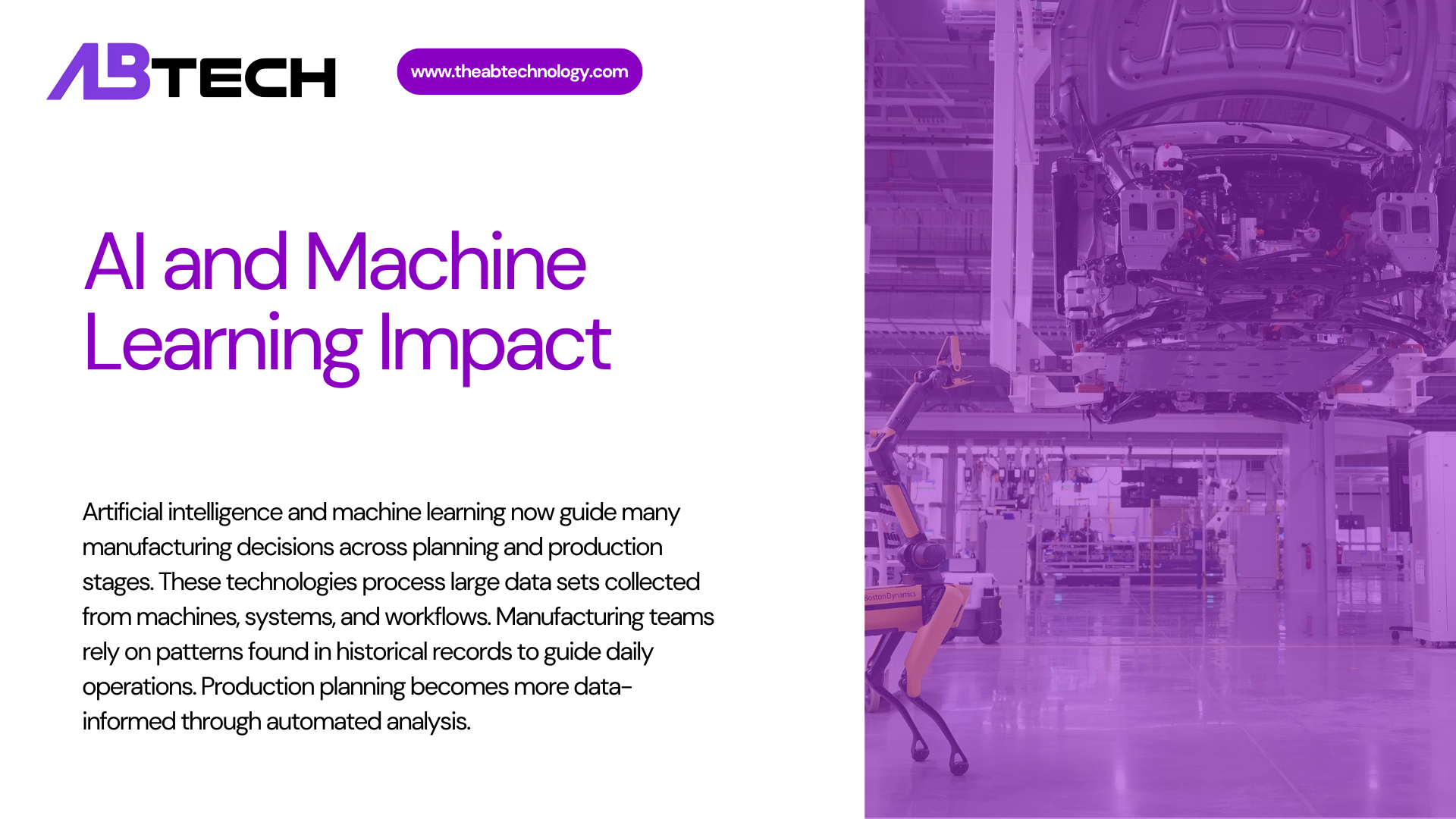
Artificial intelligence and machine learning now guide many manufacturing decisions across planning and production stages. These technologies process large data sets collected from machines, systems, and workflows. Manufacturing teams rely on patterns found in historical records to guide daily operations. Production planning becomes more data-informed through automated analysis. Machine learning models adjust as new information enters the system. This allows production systems to respond to changes without constant manual input. Decision-making becomes more consistent across shifts and facilities. Human oversight remains important while systems handle data-heavy tasks. AI supports stability by reducing guesswork during complex processes. Manufacturers use these tools to maintain consistent output levels. Planning teams benefit from clearer forecasts and fewer surprises. Workflow coordination improves through shared data insights. These technologies continue to expand across manufacturing environments. Their role supports better control across operations.
Predictive Quality Control
Artificial intelligence supports quality control by reviewing large volumes of production data. Sensors collect measurements from machines during each production stage. These measurements help identify early signs of defects or irregular output. Systems learn from past quality issues recorded across multiple production cycles. Alerts guide teams before issues affect finished products. Inspection processes rely less on manual sampling methods. Consistent monitoring supports higher product uniformity. Production teams gain better insight into process stability. AI systems support pattern recognition beyond human observation. Quality checks happen continuously rather than at fixed intervals. This approach reduces rework across production lines. Data records support traceability for compliance needs. Quality teams focus on review and decision-making. Manufacturing output becomes more predictable over time.
Supply Chain Automation
Machine learning supports planning across supply chains and internal workflows. Systems analyze demand trends using historical production and order data. Forecasts guide purchasing and inventory planning decisions. Material flow becomes easier to manage across multiple suppliers. Automated scheduling helps balance workloads across production lines. Delays become easier to detect through real-time updates. Workflow systems guide task assignments for production staff. Machine learning adapts schedules when disruptions occur. Transport planning benefits from better timing estimates. Inventory levels stay closer to actual production needs. Manual adjustments decrease as systems learn recurring patterns. Teams spend less time correcting scheduling conflicts. Data-driven planning supports steady operations. Supply chain visibility improves across departments.
Real Time Decisions
Data-driven systems support faster decisions during daily production. Sensors capture performance data from machines and tools. Dashboards present clear summaries for supervisors and operators. Alerts highlight unusual behavior or output variation. Teams respond before small issues grow into downtime. Production adjustments rely on current conditions rather than assumptions. Data updates arrive continuously across connected systems. Managers track output rates and equipment status at a glance. Maintenance planning becomes more accurate through live data. Decision-making shifts closer to the shop floor. Operators trust data to guide actions during shifts. Reporting becomes more consistent across departments. Records support long-term process review. Manufacturing gains better control through timely insights.
Robotics and Automation Shifts
Robotics and automation play a growing role in modern manufacturing operations. Machines now assist with tasks that demand precision and repetition. Automated systems support production consistency across long shifts. Labor structures change as machines take on routine responsibilities. Workers focus more on oversight and process control. Automation supports predictable production pacing across lines. Safety improves through controlled machine movements and monitoring systems. Manufacturing sites adjust layouts to support automated workflows. Robotics supports both high-volume and flexible production needs. Training programs adapt to support machine interaction. Maintenance planning becomes part of daily operations. Automation systems follow programmed sequences with minimal variation. These tools help manufacturers meet output expectations. Robotics remains a core part of production strategy.
Robotics and Labor Changes
Robotics is reshaping how labor is used across manufacturing sites. Machines handle repetitive tasks that require consistency. Human workers focus on supervision and problem-solving. Production lines benefit from steady output pacing. Robots reduce physical strain for workers in demanding roles. Training shifts toward system oversight and programming basics. Labor planning adapts to mixed human and machine teams. Output quality becomes more uniform across shifts. Safety improves through controlled machine movements. Workers interact with machines through simple interfaces. Job roles evolve toward technical support and monitoring. Robotics reduces error rates linked to fatigue. Production planning accounts for automated task cycles. Manufacturing teams adapt skills over time.
Collaborative Robots
Collaborative robots work alongside people without barriers. These systems respond to human movement and position. Safety features stop motion during unexpected contact. Workers guide robots through simple demonstrations. Setup time stays shorter than traditional automation systems. Collaborative robots support flexible production layouts. Tasks change without major reconfiguration. Small batch production benefits from adaptable setups. Workers maintain control over task sequencing. Productivity stays steady during role transitions. Shop floors feel more organized with shared workflows. Training focuses on safe interaction practices. Production teams accept automation more easily. Human judgment remains part of daily operations.
Advanced Task Automation
Advanced automation systems manage complex or repetitive tasks. These systems operate across multiple machines and stages. Software coordinates timing between equipment units. Automated systems follow precise task sequences. Consistency remains stable during long production runs. Complex assembly steps follow programmed instructions. Manual intervention decreases during normal operations. Operators monitor systems rather than perform each task. Automation supports higher production volumes. Equipment operates within defined parameters. Process documentation becomes easier through system logs. Downtime tracking becomes more accurate. Maintenance planning relies on usage data. Manufacturing benefits from predictable task execution.
IoT and Connectivity Systems
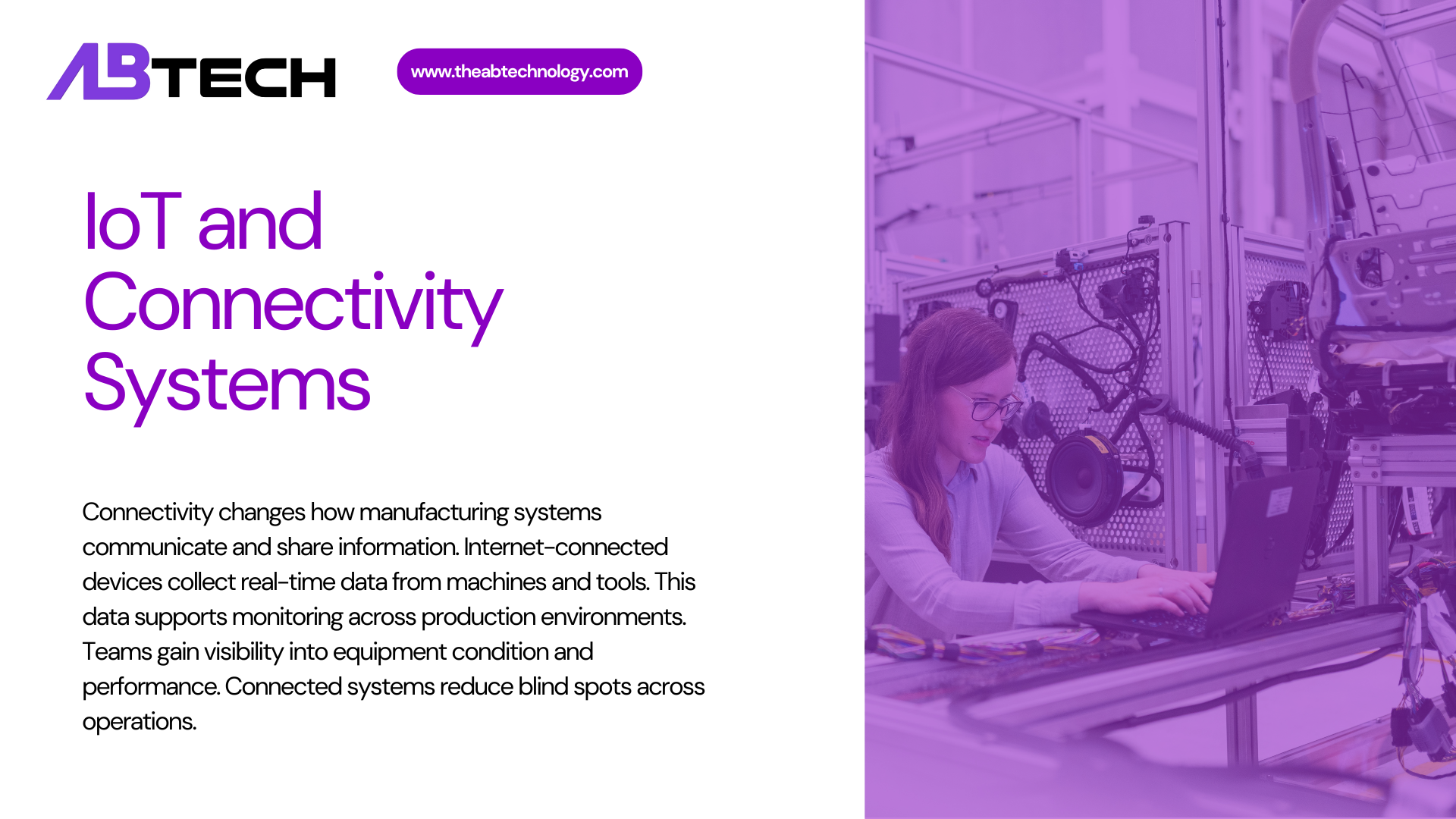
Connectivity changes how manufacturing systems communicate and share information. Internet-connected devices collect real-time data from machines and tools. This data supports monitoring across production environments. Teams gain visibility into equipment condition and performance. Connected systems reduce blind spots across operations. Production planning benefits from shared information across departments. Connectivity supports coordination between suppliers and facilities. Data flows without delays caused by manual reporting. Maintenance teams rely on connected alerts to guide actions. Equipment health becomes easier to track over time. Communication between systems supports smoother workflows. Connectivity supports faster responses to unexpected changes. Manufacturing environments become more transparent. These systems support better operational awareness.
Equipment Monitoring
IoT devices monitor equipment performance continuously. Sensors track temperature, vibration, and operating speed. Data flows into centralized monitoring platforms. Early warning signs appear before equipment failure. Maintenance teams receive clear alerts for inspection. Equipment health remains visible across shifts. Monitoring reduces unexpected downtime events. Production schedules adjust based on machine status. Energy usage becomes easier to measure. Operators rely on dashboards for quick checks. Historical records support long-term equipment planning. Connected devices improve transparency across facilities. Equipment life cycles extend through timely care. Manufacturing systems stay informed at all times.
Predictive Maintenance
Connected devices support maintenance planning through data trends. Sensors detect changes in machine behavior over time. Patterns suggest wear before breakdown occurs. Maintenance tasks follow the actual equipment condition. Spare parts planning improves through usage data. Downtime becomes easier to avoid through early action. Technicians focus on targeted repairs. Maintenance records update automatically after service. Production disruption stays lower across busy periods. Equipment reliability supports stable output levels. Monitoring systems learn from past maintenance events. Maintenance budgets become easier to manage. Data supports long-term asset planning. Manufacturing benefits from consistent equipment care.
Data Across Networks
Connected systems share data across production lines and suppliers. Information flows between planning, production, and logistics teams. Data consistency improves across departments. Decisions rely on shared information rather than isolated reports. Production adjustments reflect supply availability. Inventory records update automatically with usage. Communication gaps are reduced through shared dashboards. Data supports coordination between facilities. Supply disruptions become visible sooner. Planning teams respond with updated schedules. Networked data supports traceability across processes. Reporting becomes faster and more accurate. Teams trust shared data sources. Manufacturing gains smoother coordination.
Simulation and Immersive Tools
Simulation and immersive tools support design, training, and planning activities. Virtual environments allow teams to test processes before physical execution. These tools reduce risk during early development stages. Manufacturing teams explore multiple scenarios through simulation models. Training programs benefit from realistic task practice. Design reviews become more visual and interactive. Feedback cycles shorten through shared virtual spaces. Simulation tools reflect real production conditions through data inputs. Teams gain confidence before launching changes. Planning benefits from tested assumptions. Collaboration improves across engineering and operations teams. Learning becomes more consistent across locations. These tools support careful preparation before execution. Manufacturing gains clarity through visual testing.
Virtual Training Tools
Virtual reality supports workforce training in controlled environments. New workers practice tasks without production risk. Simulated scenarios reflect real equipment behavior. Training programs adapt to skill levels. Workers repeat procedures until they are confident. Safety training benefits from realistic simulations. Learning happens without interrupting production schedules. Complex tasks become easier to understand visually. Training outcomes stay consistent across locations. Virtual environments support remote learning needs. Trainers review performance data from sessions. Skills assessment becomes more objective. Workforce readiness improves before the shop floor work. Manufacturing training becomes more structured.
Digital Twin Models
Digital twins replicate physical systems through data models. These models reflect real production conditions. Engineers test changes before physical trials. Design updates follow simulated performance results. Testing cycles are shortened through virtual validation. Production risks decrease during process changes. Data from real systems updates digital models. Engineers explore multiple scenarios quickly. Resource use becomes easier to predict. Equipment layout changes test virtually first. Collaboration improves across design teams. Simulation results guide planning decisions. Documentation improves through model records. Manufacturing benefits from reduced trial errors.
Immersive Design Processes
Immersive tools support product design review. Teams visualize components at full scale. Design issues appear earlier through visual inspection. Changes occur before physical prototypes exist. Collaboration improves through shared virtual spaces. Feedback cycles shorten during design stages. Designers test ergonomics through simulated interaction. Material choices appear more realistic. Production constraints factor into early design. Engineering teams review designs together remotely. Design approval moves faster with visual clarity. Errors are reduced through early detection. Development timelines stay more predictable. Manufacturing design becomes more informed.
Emerging Manufacturing Technologies
New technologies continue to influence how manufacturing systems evolve. These developments focus on flexibility, sustainability, and data handling. Manufacturers explore new production methods to meet changing demand. Technology supports shorter development cycles for products. Energy management becomes a stronger focus through new tools. Data processing methods adapt to larger data volumes. Production systems become more adaptable through modular technologies. Equipment capabilities expand through digital control systems. Planning teams evaluate new tools based on practical value. Adoption happens gradually through pilot programs. Manufacturing strategies adjust based on performance results. Long-term planning includes emerging tools. These technologies shape future production models. Manufacturing continues to adapt through steady progress.
Additive Manufacturing Advances
Additive manufacturing supports flexible production methods. Components form layer by layer from digital models. Design freedom increases for complex shapes. Prototyping costs remain lower than traditional methods. Small batch production becomes practical. Tooling needs decrease for certain components. Material waste stays lower through precise deposition. Design updates move directly into production. Engineers test multiple versions quickly. Custom parts become easier to produce. Supply chains shorten for select components. Production lead times decrease for prototypes. Quality control focuses on layer consistency. Manufacturing adapts to new build methods.
Sustainable Production Technologies
Sustainable technologies support responsible manufacturing practices. Energy monitoring tracks usage across production stages. Systems identify areas of high consumption. Waste tracking improves material planning. Reuse strategies gain better measurement support. Equipment settings adjust to lower energy use. Production planning considers resource availability. Environmental reporting becomes more accurate. Teams monitor water and material usage. Processes shift toward lower-impact methods. Long-term cost planning includes resource data. Compliance reporting benefits from clear records. Sustainable practices become measurable. Manufacturing balances output with responsibility.
Edge and Cloud Systems
Edge computing processes data close to equipment sources. Fast response supports real-time control needs. Cloud platforms store long-term production records. Data access remains available across locations. Processing loads are distributed between local and remote systems. Latency decreases for time-sensitive tasks. Storage capacity supports growing data volumes. Analysis tools run on shared platforms. Security policies manage data access. System updates deploy across networks smoothly. Collaboration improves through shared access. Performance tracking becomes more consistent. Decision support tools stay accessible. Manufacturing gains flexible data management.