

Wearable health devices have changed remote patient monitoring and health management. These gadgets, which range from medical-grade sensors to fitness trackers and smartwatches, collect data in real-time to aid in early diagnosis and preventive therapy. They provide information that enables users to make healthy lifestyle decisions by monitoring critical parameters like heart rate, blood oxygen levels, and sleep cycles. Continuous monitoring may help improve care coordination and potentially reduce hospital visits, though outcomes depend on clinical use and patient context. Wearable technology’s strength lies in its ability to integrate personal wellness tracking with professional medical applications.
By offering useful information, these advances have also inspired more people to take charge of their health. While some wearables meet medical-grade standards, many consumer devices focus on wellness and are not intended for clinical use. Modern wearables combine cloud computing and artificial intelligence to assess health trends over time, going beyond simple data collection. As these gadgets develop further, they have a significant impact on how healthcare systems adjust to a world that is increasingly linked and data-driven.
Evolution of Wearable Devices
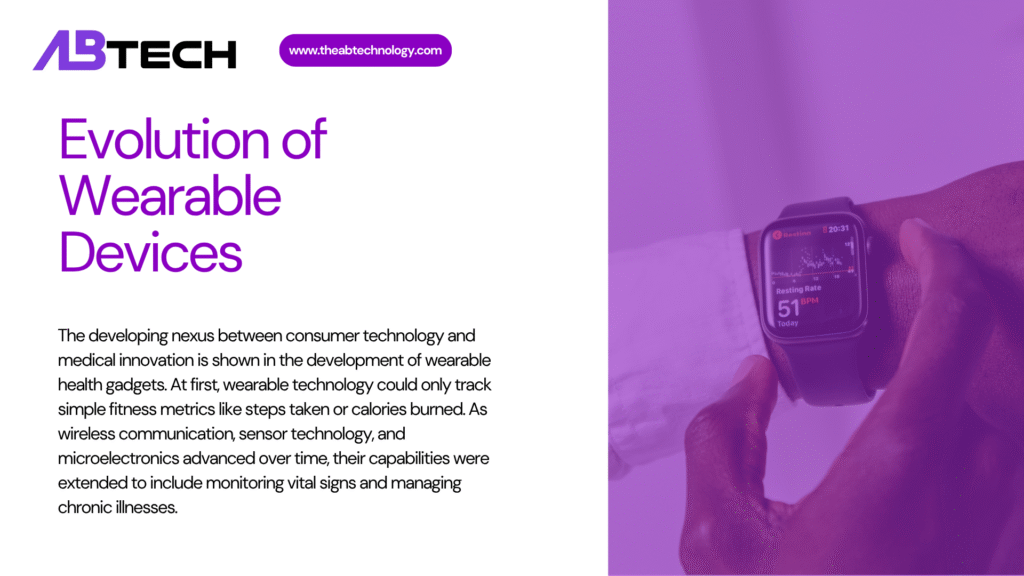
The developing nexus between consumer technology and medical innovation is shown in the development of wearable health gadgets. At first, wearable technology could only track simple fitness metrics like steps taken or calories burned. As wireless communication, sensor technology, and microelectronics advanced over time, their capabilities were extended to include monitoring vital signs and managing chronic illnesses. Some smartwatches now include ECG, oxygen, and fall detection sensors, though features vary by model and approval status. Medical-grade wearables entered the market, designed to provide precise, real-time health data for doctors and researchers.
The global demand for health monitoring solutions has accelerated development, particularly after the rise of telemedicine and remote care. Manufacturers now focus on improving accuracy, comfort, and battery efficiency to make continuous monitoring practical for everyday users. Wearable devices are also becoming more discreet and ergonomic, allowing users to track health seamlessly throughout the day. The healthcare sector increasingly utilizes this technology to support early intervention, patient engagement, and preventive care. The distinction between clinical and wellness devices is being increasingly blurred as technology advances, resulting in more individualized and integrated healthcare experiences.
Development in Healthcare Technology
The earliest wearable electronics were simple fitness trackers that tracked steps and exercise. Some medical-grade devices, such as continuous glucose monitors (CGMs), can track glucose levels, though most consumer wearables cannot do this accurately yet. These developments improve early diagnosis and treatment by allowing medical professionals to evaluate patient data remotely. The need for accessibility, accuracy, and convenience in healthcare monitoring is fueling the ongoing increase in demand for wearable medical technology.
Types of Health Wearables
Fitness trackers, ECG monitors, blood pressure wearables, glucose sensors, and sleep tracking bands are examples of wearable health technology available today. Disposable biosensors and patches are likewise utilized in hospitals to keep an eye on patients during their recovery or following surgery. By transmitting real-time data, these devices can help improve diagnostic accuracy and enable more tailored treatment plans when used appropriately.
Wearables in the Healthcare Industry
Wearable technology has been adopted by the healthcare sector as a tool for chronic disease management, preventive care, and ongoing monitoring. These gadgets gather physiological information, including heart rate, oxygen saturation, and sleep quality, giving doctors and patients important information. Wearable sensors help reduce the frequency of in-person visits by supporting remote monitoring and data sharing. Programs for remote patient monitoring are now crucial for the treatment of diseases like diabetes, high blood pressure, and heart problems.
By providing patients with real-time health information, wearables enable them to participate more actively in their recuperation. In order to assist people in managing stress and sustaining physical activity, fitness trackers have also been incorporated into corporate health initiatives and wellness programs. Some healthcare professionals use wearable data to guide decisions and detect early warning signs, though usage varies by setting and device type. The integration of wearable data with electronic health records ensures seamless communication between devices and healthcare systems. As healthcare becomes more data-driven, wearable devices are at the forefront of enabling accessible, continuous, and personalized care.
Remote Patient Monitoring
With wearable technology, physicians can keep an eye on patients with long-term conditions without needing to visit the hospital frequently. Some specialized wearables, such as continuous glucose monitors, allow tracking of blood sugar levels for patients with diabetes. Remote monitoring offers alerts for prompt medical attention and aids in the early detection of anomalies. Patients can rest easy knowing that their health is being monitored constantly thanks to this technology, which also eases the burden on medical facilities.
Fitness Tracker Applications
Fitness trackers are now crucial for wellbeing management and preventative healthcare. They track heart rate variability and sleep quality in addition to physical activity. Certain fitness trackers equipped with clinically validated sensors are being tested or used in healthcare settings. Nowadays, a lot of fitness trackers have integrations with telemedicine platforms and healthcare apps, enabling users to instantly share health information with experts.
How Wearable Tech Works
A complex web of sensors, computers, and wireless devices that record and interpret biological information powers wearable technology. Each gadget measures blood flow, movement, and other physiological data using specialized sensors, including gyroscopes, accelerometers, and photoplethysmography sensors. These sensors transform unprocessed signals into data that can be read and processed by built-in algorithms. Real-time monitoring and analysis are made possible by modern wearables that send data via Bluetooth or Wi-Fi to smartphones or cloud servers. In order to exchange precise data with medical professionals for evaluation, healthcare applications rely on this connectivity. The materials used in these devices are lightweight and skin-safe, ensuring comfort during extended wear.
Advances in flexible electronics and textile integration have led to the creation of patches and smart clothing that can track health non-invasively. Battery efficiency and low-power consumption also contribute to the practicality of continuous monitoring. The combination of precise sensors, smart materials, and secure cloud storage ensures that wearable devices deliver reliable and actionable insights. As technology progresses, wearable devices will become even more intelligent, compact, and personalized for every user’s health needs.
Wearable Sensor Systems
Sensors are the foundation of every wearable device. Accelerometers, PPG sensors, and ECG modules capture signals related to movement, blood flow, and heart activity. These sensors process the data through algorithms that interpret it into readable health metrics. Cloud-based systems securely store and transmit this data for healthcare analysis and personalized insights.
Materials Used in Wearables
Wearable devices are made from skin-safe, lightweight materials like silicone, flexible polymers, and conductive fabrics. These materials enhance comfort and allow continuous wear throughout the day. New developments in smart textiles and biocompatible materials are further improving accuracy and usability while ensuring devices remain durable and non-invasive.
Monitoring Health Conditions
Many modern wearables can monitor a growing range of health indicators, making them valuable for preventive and clinical applications. Patients with chronic illnesses benefit from continuous data collection, allowing early detection of irregularities. Cardiac patients, for instance, can use ECG-equipped wearables to track heart rhythm and detect potential arrhythmias. Diabetic users rely on continuous glucose monitors to manage blood sugar levels without frequent finger pricks. Respiratory wearables monitor oxygen levels and breathing patterns, assisting patients with asthma or COPD.
Fall detection systems and emergency alert features are among the devices made specifically for seniors, guaranteeing their safety and prompt aid when required. With wearables that monitor stress levels, mood swings, and sleep quality, mental health monitoring has also become more popular. Sleep-focused wearables give useful input for improved sleep by analyzing movement and oxygen levels to detect conditions like sleep apnea or insomnia. These tools enable people to recognize health patterns and make well-informed choices regarding treatment or lifestyle changes. Wearable health monitoring is reshaping how clinicians and patients manage care, particularly as device precision improves.
Diseases Tracked by Wearables
Chronic conditions like diabetes, high blood pressure, and heart disease are frequently monitored with wearable technology. They also help patients recuperate after surgery, regulate stress, and deal with respiratory issues. Emergency warnings and fall detection tools help older users stay safe and independent.
Sleep Monitoring Technology
Sensors are used by sleep tracking systems to assess oxygen levels, heart rate, and movement. These data points aid in assessing the quality of sleep and identifying conditions like sleep apnea or insomnia. Wearables make recommendations for enhancing sleep and general well-being by examining nighttime habits.
Future of Wearable Health Devices
Innovation in personalized healthcare, data integration, and artificial intelligence is driving the future of wearable health devices. More sophisticated AI algorithms are now able to spot patterns in biometric data that could indicate early warning indications of disease. Wearable technology can aid in population-level health research by predicting and preventing disease outbreaks when paired with big data analytics. Patients can receive care from home with growing reliability as wearable and telehealth technologies improve. There are still issues, though, such as worries about device interoperability, regulatory standards, and data privacy.
Legislators and manufacturers are attempting to improve security and guarantee the moral use of medical data. The creation of energy-harvesting wearables that can be charged by solar energy or body movement is another exciting avenue. The creation of flexible, skin-like sensors will make future devices more capable but nearly unnoticeable. Wearable technology will be essential to early detection, tailored care, and health optimization as healthcare systems embrace digital transformation. Accessibility and innovation will work together to create a future in which ongoing health monitoring is a normal aspect of daily living.
AI and Data Integration
Wearable technology benefits from artificial intelligence’s ability to swiftly and precisely analyze large volumes of biometric data. It can help with early diagnosis, forecast dangers, and spot health trends. When combined with big data analytics, AI-powered wearables enhance individualized care planning and public health monitoring.
Challenges and Opportunities
Wearable technology still faces issues like accuracy limitations, privacy concerns, and regulatory compliance despite significant developments. Ongoing research, however, attempts to get around these obstacles. With enhanced data security, accessibility, and integration into healthcare systems, wearables are likely to become vital instruments in routine health management.