

Technology now plays a central role in how clothing is planned, produced, and improved across modern manufacturing environments. Digital systems support pattern planning, material tracking, and production timing. Factories rely on connected tools that share data across departments. This shift changes how teams manage quality and output. Manual steps still exist, yet they work beside automated support. Production floors use sensors to observe machine behavior over time. Data collected during production helps reduce material waste. Planning teams review digital samples before physical runs begin. This shortens approval cycles. Clothing makers gain clearer visibility into stock levels. Production delays become easier to spot early. Communication between design and production becomes more direct. Manufacturing decisions rely less on guesswork. The overall process becomes easier to manage at scale.
Technology In Clothing
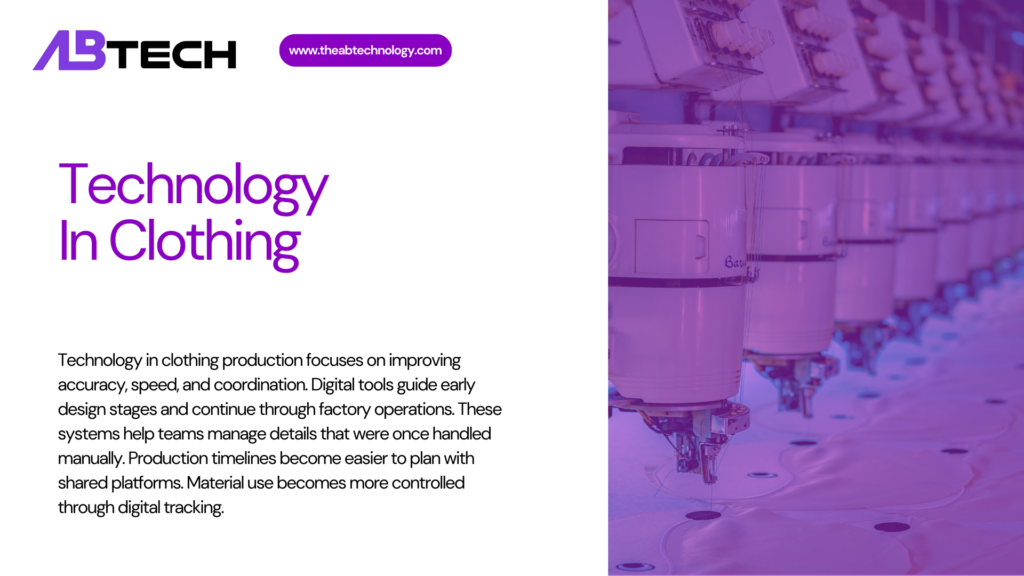
Technology in clothing production focuses on improving accuracy, speed, and coordination. Digital tools guide early design stages and continue through factory operations. These systems help teams manage details that were once handled manually. Production timelines become easier to plan with shared platforms. Material use becomes more controlled through digital tracking. Designers and factory teams work from the same reference files. Errors caused by miscommunication decrease over time. Production updates stay visible across departments. This approach supports steady output levels. Clothing factories adapt to market changes faster. Data sharing builds consistency across product lines. Workers rely on clear instructions rather than guesswork. Production planning becomes more predictable. Overall, the workflow gains a better structure.
Digital Design Tools
Digital design tools guide early clothing development stages. Designers work with software that creates accurate garment layouts. Measurements remain consistent across different sizes. Virtual samples replace repeated physical mockups. This saves materials during testing phases. Design revisions happen faster through shared files. Teams can review changes in real time. Fabric behavior can be simulated before cutting begins. This helps predict fit issues. Production teams receive clearer specifications. Errors caused by misreading sketches drop. Communication improves between design and manufacturing groups. Digital files remain stored for future use. This creates better continuity across collections.
Automated Production Systems
Automated production systems support repetitive factory tasks. Machines handle cutting with precise accuracy. Sewing machines follow programmed paths. Human operators focus on oversight and adjustments. Production speed becomes more predictable. Output consistency improves across batches. Equipment performance data gets recorded continuously. Maintenance teams review this data for early warning signs. Downtime is reduced through planned servicing. Quality checks happen at multiple stages. Finished garments show fewer variations. Workers face less physical strain. Training focuses on machine control skills. Factories maintain a steady production flow.
Smart Textile Manufacturing
Smart textile manufacturing connects physical equipment with digital monitoring systems. Factories use connected devices to track conditions during production. These systems provide real-time updates from the factory floor. Material handling becomes easier to follow. Environmental conditions stay within controlled ranges. Production managers rely on dashboards instead of manual logs. This approach supports stable fabric quality. Equipment health becomes easier to monitor. Planning teams gain access to clearer data. Production risks become easier to predict. Communication improves across shifts. Decision-making relies on shared information. Manufacturing processes stay better organized. Overall, factory awareness improves.
Connected Factory Equipment
Connected factory equipment relies on industrial IoT networks. Machines communicate status updates through sensors. Production managers view dashboards showing live activity. Temperature and humidity levels are tracked automatically. These readings protect fabric quality. Equipment usage patterns become easier to review. Alerts notify staff of irregular behavior. Small issues get addressed before failure occurs. Energy use becomes more visible. Factories adjust schedules to balance loads. Data sharing supports smoother coordination. Inventory movement gets logged digitally. Planning teams gain better forecasting insight. Overall operations stay more stable.
Data Driven Decisions
Data-driven decisions shape daily factory planning. Production data gets collected from multiple sources. Teams review trends over time. Output forecasts rely on historical records. Material ordering becomes more accurate. Storage space gets managed with clearer expectations. Labor planning adjusts based on real demand. Seasonal shifts appear earlier in data signals. Decision-making becomes less reactive. Reporting tools present simple summaries. Managers track progress against targets. Waste levels receive closer attention. Process gaps become easier to spot. Continuous review supports steady improvement.
Advanced Production Methods
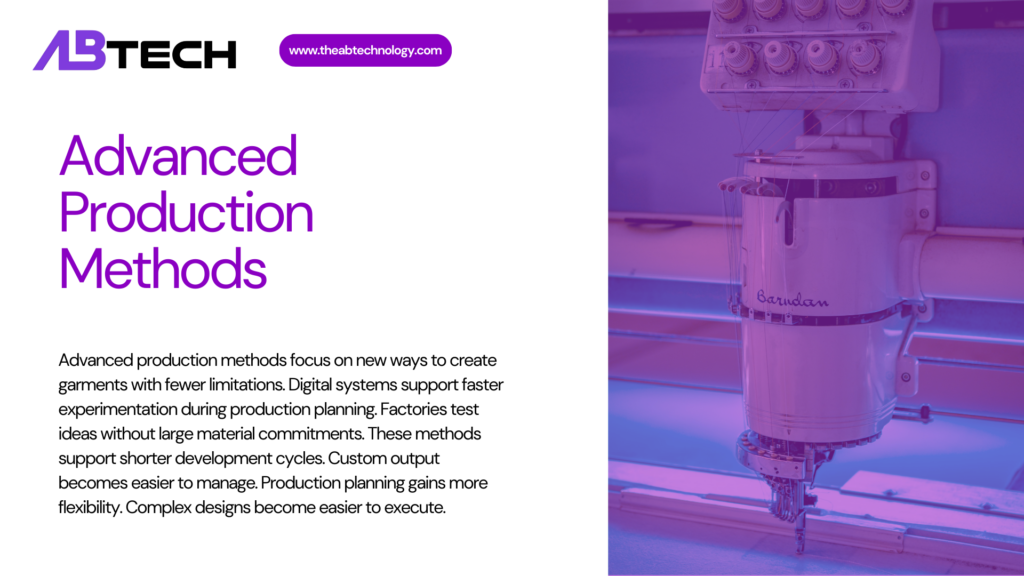
Advanced production methods focus on new ways to create garments with fewer limitations. Digital systems support faster experimentation during production planning. Factories test ideas without large material commitments. These methods support shorter development cycles. Custom output becomes easier to manage. Production planning gains more flexibility. Complex designs become easier to execute. Material usage stays more controlled. Quality checks adapt to new processes. Workers receive training for updated tools. Production lines adjust based on product needs. Smaller batch sizes become practical. Manufacturing adapts to changing demand. These methods support modern clothing workflows.
AI Garment Production
AI garment production supports pattern analysis and quality checks. Systems learn from past production data. Fabric defects are identified through image scanning. Sorting tasks become faster. AI tools support size grading accuracy. Production planning benefits from predictive analysis. Demand estimates guide batch sizing. Overproduction risks are reduced. AI systems support scheduling choices. Labor allocation improves through pattern recognition. Quality review becomes more consistent. Training data grows with each cycle. Decision support improves gradually. Factories gain clearer operational insight.
3D Clothing Printing
3D clothing printing introduces new production possibilities. Components get built layer by layer. Material use stays controlled. Prototypes get produced quickly. Designers test the structure without full assembly. Custom pieces become easier to create. Production runs stay small and precise. Waste from excess cutting drops. Complex shapes get produced accurately. The assembly steps become fewer. Production time shortens for specific items. Digital files guide each print cycle. Adjustments happen through file updates. This method supports experimental garment development.
Sustainable Textile Technology
Sustainable textile technology focuses on reducing resource strain during manufacturing. Digital tools help track material use more closely. Factories measure water and energy use during each stage. Waste reporting becomes more detailed. Production goals include resource awareness. Planning teams review data before scaling output. Equipment settings support lower consumption levels. Materials move through monitored workflows. Sustainability goals stay measurable. Factories adjust processes based on recorded results. Long-term planning benefits from accurate records. Staff awareness improves through shared data. Manufacturing remains accountable. Environmental impact stays visible.
Resource Conscious Production
Resource-conscious production focuses on material control. Technology tracks fabric usage closely. Cutting plans reduces leftover scraps. Water use gets monitored digitally. Energy consumption stays visible throughout shifts. Machines operate within set thresholds. Waste reports guide improvement efforts. Recycled materials get tracked separately. Planning teams compare resource data across runs. Adjustments happen based on clear records. Production targets include material goals. Staff awareness increases through shared metrics. Long-term planning becomes more grounded. Environmental impact stays measurable.
Smarter Material Tracking
Smarter material tracking supports supply transparency. Digital tags follow materials through stages. Inventory levels update automatically. Storage errors are reduced through scanning systems. Material origins remain documented. Quality checks reference tracking records. Production delays from missing stock decrease. Teams locate materials faster. Forecasting improves with accurate counts. Seasonal planning gains stronger support. Procurement teams avoid excess ordering. Reporting becomes more reliable. Accountability improves across departments. Manufacturing stays better organized.
Technology-Enabled Clothing
Technology-enabled clothing blends garment construction with digital capability. Production teams add electronic elements during assembly. These additions require careful planning. Material choices support durability. Manufacturing processes adapt to new components. Quality checks include functional testing. Design teams consider comfort during development. Production lines adjust placement methods. Digital components stay protected during wear. Clothing supports everyday use cases. Data handling follows defined standards. Manufacturing teams receive specialized training. Output consistency remains a priority. Clothing production expands beyond traditional methods.
Smart Clothing Basics
Smart clothing basics involve embedded technology within garments. Sensors get placed into fabric structures. These sensors track physical signals. Data gets transmitted to connected devices. Clothing supports activity monitoring. Comfort remains a priority in design. Wash durability receives careful testing. Power sources stay lightweight. Data accuracy improves through calibration. Use cases focus on daily wear. Production requires precise placement methods. Quality control checks sensor function. Design teams balance function and comfort. Manufacturing adapts to these added steps.
Current Fashion Technology
Current fashion technology reflects changing consumer needs. Custom sizing gains more attention. Digital fitting tools support online shopping. Production responds to shorter trend cycles. Technology supports faster turnaround times. Small batch runs become more common. Data feedback informs future designs. Manufacturing stays flexible. Material choices adapt to new tools. Production planning stays more responsive. Quality remains consistent across releases. Technology supports transparency in processes. Consumers gain clearer product information. Manufacturing continues to adjust steadily.