
Healthcare technology is entering a period shaped by connected devices, data-driven care, and new ways of treating patients beyond hospital walls. Medical services are shifting from location-based care into daily life through digital tools. Many health tasks now happen before a patient reaches a clinic. Data collection plays a strong role in guiding care choices and long-term planning. Care teams rely on timely information rather than delayed reports. Patients gain more awareness of their own health patterns. This shift supports earlier detection of health concerns. It also reduces unnecessary hospital visits. Access to care becomes broader for people in distant areas. Technology supports both prevention and treatment in steady ways.
Connected Care Systems
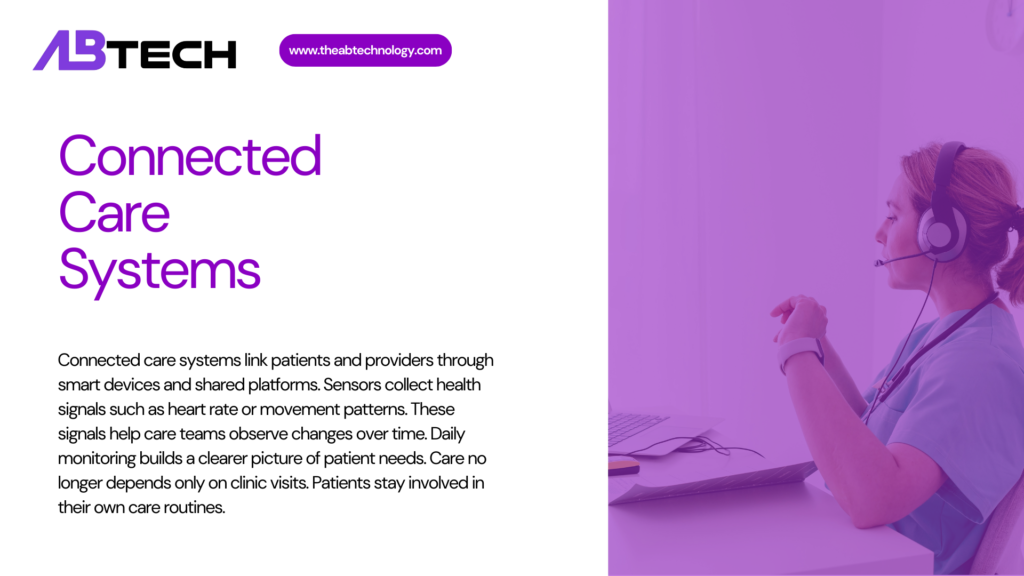
Connected care systems link patients and providers through smart devices and shared platforms. Sensors collect health signals such as heart rate or movement patterns. These signals help care teams observe changes over time. Daily monitoring builds a clearer picture of patient needs. Care no longer depends only on clinic visits. Patients stay involved in their own care routines. Alerts can prompt quick responses during risk moments. This approach supports aging populations living at home. It eases pressure on crowded facilities. Care becomes more continuous and personal.
Medical Device Networks
Medical device networks refer to the Internet of Medical Things working together. Devices communicate through secure channels to share readings. Each device has a focused role in tracking health markers. Combined data shows patterns that single tools may miss. This setup supports long-term condition management. Care teams gain steady insight into patient status. Patients feel supported without constant appointments. Home-based care becomes more practical. System reliability matters for patient safety. Trust grows through consistent performance.
Remote Monitoring Tools
Remote monitoring tools allow health tracking outside clinical spaces. Wearable medical devices track activity and vital signs daily. These tools blend into normal routines with minimal effort. Data flows directly to care providers for review. Early changes can be flagged before symptoms worsen. Patients feel reassured through regular oversight. Care plans adjust based on real-world data. This reduces emergency visits over time. Families gain peace of mind. Monitoring supports both recovery and prevention.
Health Data Protection
Health data protection focuses on keeping medical information safe and accurate. Digital records move across systems and devices. Strong security methods help prevent misuse of sensitive data. Blockchain-based records offer traceable access histories. Each update leaves a clear record of activity. This builds accountability within health systems. Patients gain more control over who views their data. Secure sharing supports coordinated care. Privacy remains a core concern for trust. Protection methods continue to develop alongside data growth.
Blockchain Health Records
Blockchain health records store data in linked digital blocks. Each block connects to the previous record. This structure reduces unauthorized changes. Access permissions can be clearly defined. Patients may approve data sharing with care teams. Records stay consistent across platforms. Data loss becomes less likely. Transparency supports accurate treatment decisions. Systems rely on shared standards. Security remains a primary focus.
Advanced Treatment Tools
Advanced treatment tools change how care is delivered and planned. Technology now supports precise treatment choices. Data helps match care to patient traits. Physical tools support faster recovery processes. These methods shorten waiting times for some procedures. Care teams gain flexibility in treatment planning. Patients receive options based on personal needs. Tools support both routine and complex care. Outcomes improve through targeted approaches. Medicine becomes more adaptive to individuals.
Precision Care Methods
Precision medicine technology uses data to guide treatment choices. Genetic and lifestyle factors influence care plans. Treatments focus on specific patient profiles. This reduces trial and error in care. Side effects may decrease through targeted methods. Providers rely on detailed patient data. Care becomes more predictive over time. Patients feel understood at a deeper level. Research supports ongoing refinement. Personalization shapes future treatment models.
Printed Medical Solutions
3D printing in medicine supports custom medical tools. Devices can match patient anatomy more closely. Production times shorten for certain items. This supports faster recovery planning. Custom designs improve comfort and fit. Materials continue to advance in quality. Care teams plan procedures with better accuracy. Printing supports education and training. Access to custom tools increases. Practical use grows across care fields.
Immersive Care Models
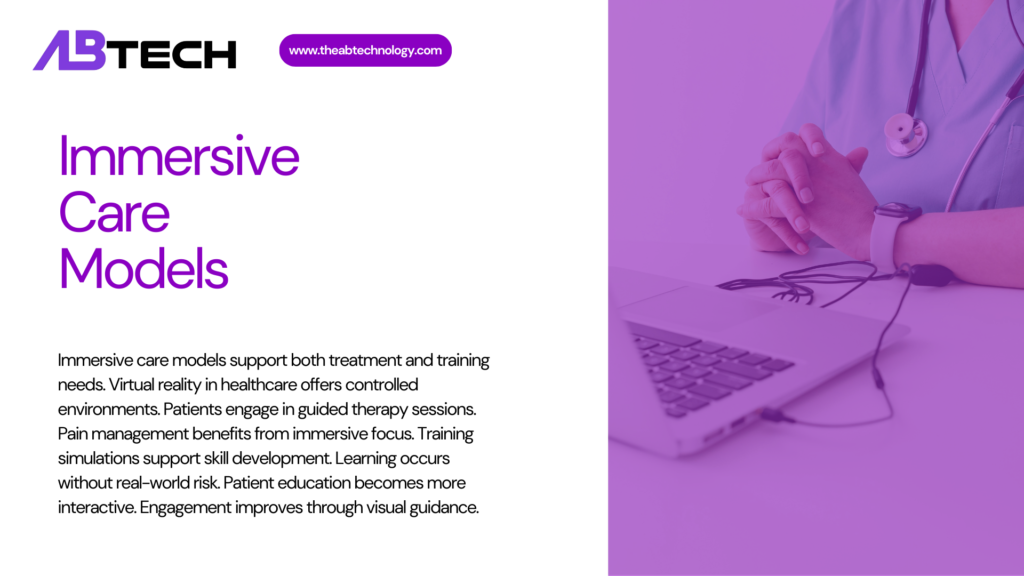
Immersive care models support both treatment and training needs. Virtual reality in healthcare offers controlled environments. Patients engage in guided therapy sessions. Pain management benefits from immersive focus. Training simulations support skill development. Learning occurs without real-world risk. Patient education becomes more interactive. Engagement improves through visual guidance. Therapy sessions feel more approachable. Care delivery expands beyond traditional formats.
Virtual Treatment Spaces
Virtual treatment spaces support therapy and recovery. Patients interact within guided digital settings. Sessions support mental and physical care goals. Repetition builds confidence during recovery. Care teams track progress through session data. Therapy adapts to patient responses. Engagement remains steady through visual feedback. These spaces support long-term therapy plans. Access remains flexible across locations. Digital care becomes part of routine treatment.
Smart Care Facilities
Smart care facilities rely on connected systems within hospitals. Smart hospital systems coordinate equipment and staff workflows. Data supports timely decision-making. Resource use becomes easier to manage. Patient movement tracking improves safety. Staff focus shifts toward direct care. Systems reduce manual coordination tasks. Facilities respond faster to changing needs. Energy use becomes more controlled. Care delivery gains consistency.
Virtual Ward Models
Virtual ward technology extends hospital care into homes. Patients receive hospital-level monitoring remotely. Care teams oversee recovery from a distance. Daily check-ins replace long stays. Patients remain comfortable at home. Beds are free for urgent cases. Monitoring ensures safety standards remain high. Communication stays clear through digital tools. Recovery feels less disruptive. Hospital care becomes more flexible.
Future Health Trends
Future health trends show steady growth across many areas. Over ten years, care will move closer to daily life. Technology will support prevention as much as treatment. Data use will guide policy and planning. Home-based care will grow in reach. Training will rely more on simulation tools. Personal data will shape care decisions. Facilities will rely on connected systems. Patient involvement will remain central. Care models will continue adapting.
Emerging Medical Tools
Emerging technologies for health and medicine include digital monitoring and immersive therapy. These tools support early action on health risks. Care teams rely on continuous data streams. Patients gain tools for self-awareness. Training methods become safer and repeatable. Treatment planning gains accuracy. Systems focus on long-term outcomes. Access to care improves in remote areas. Research supports steady refinement. Change remains gradual and patient-focused.
Care Principles Overview
The four P values in healthcare guide modern care thinking. These include predictive, preventive, personalized, and participatory care. Prediction uses data to foresee health risks. Prevention focuses on early action. Personalization adapts care to individual needs. Participation involves patients in decisions. These principles support balanced care models. Technology supports each principle in practical ways. Care becomes more collaborative. Trust grows through transparency. Outcomes benefit from shared responsibility.
Best Care Technology
The best healthcare technology supports patient needs without added strain. It fits naturally into care routines. Tools provide clear and useful information. Patients feel supported rather than overwhelmed. Care teams gain reliable insights. Systems remain flexible across settings. Security protects sensitive data. Access remains fair and practical. Technology serves care goals rather than trends. Value comes from consistent support.