
The way businesses interact with consumers is evolving mainly because of data-driven marketing. Marketers increasingly develop their tactics based on actual insights rather than conjecture. This approach helps them understand what customers want, how they behave, and what motivates them to act. When you rely on data, every decision becomes clearer, every message feels more relevant, and every campaign performs better. Companies can use information to drive performance, determine what is working, and cut what isn’t. Using data in email marketing, paid advertisements, and social media helps you build closer relationships with your audience and achieve greater outcomes.
What is Data-Driven Marketing
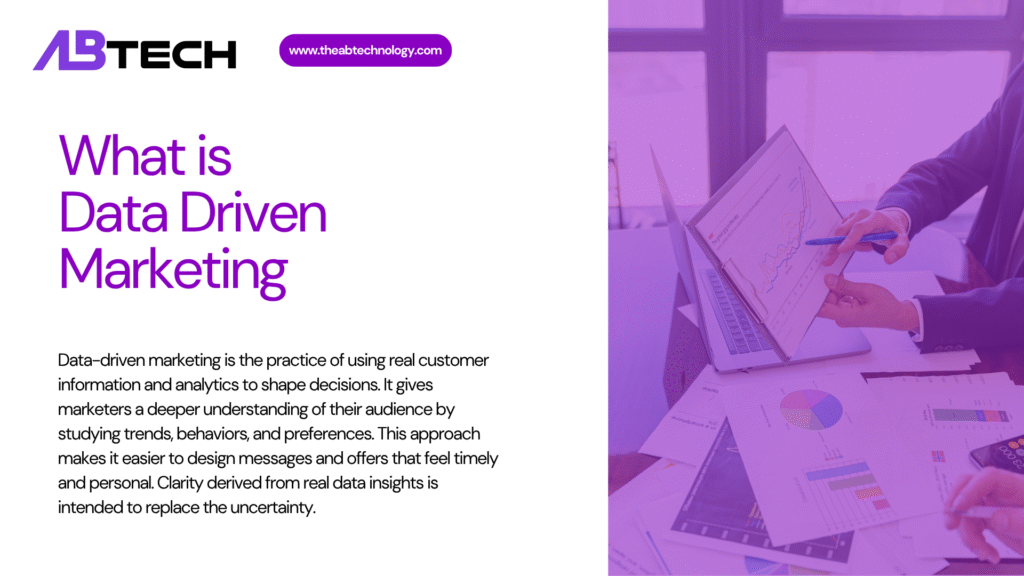
Data-driven marketing is the practice of using real customer information and analytics to shape decisions. It gives marketers a deeper understanding of their audience by studying trends, behaviors, and preferences. This approach makes it easier to design messages and offers that feel timely and personal. Clarity derived from real data insights is intended to replace the uncertainty. Companies that use this strategy frequently discover that their marketing improves in consistency and efficiency over time.
Understanding Customer Data
Customer data includes everything from purchase history to online activity. By analyzing this information, businesses can identify what matters most to their audience and act accordingly. Data can come from websites, social platforms, CRM systems, or surveys, making it a powerful tool for understanding customer motivations and improving communication.
Turning Information into Strategy
Marketers use data to guide creative choices, content planning, and campaign timing. Every part of a marketing plan benefits from accurate insights. When teams rely on data, they can align their messages with customer needs and predict how different approaches will perform before spending on ads.
Building Customer Segments
Grouping customers based on shared interests or behaviors helps tailor communication and ensures campaigns reach the right people. This segmentation allows marketers to send the right message to the right audience instead of using a one-size-fits-all approach. Over time, these segments become even more refined as new data flows in.
Why It Matters
When data drives your decisions, your marketing becomes more effective, efficient, and relevant. It also helps build trust with customers who feel understood. In today’s market, people expect personalized experiences, and data-driven marketing delivers exactly that.
Benefits of Data-Driven Marketing
Data-driven marketing offers more advantages than just financial gains. It enhances performance and reduces wasted effort while assisting companies in developing a better connection with their audiences. Marketers gain confidence and observe more certain outcomes when they base their judgments on actual evidence. Businesses that put data first eventually become more flexible and able to deal with shifting market trends.
Improved Targeting
Every campaign is more targeted and effective when marketers use accurate data to reach the appropriate audience at the right time. This increases engagement and decreases wasted ad spend. By targeting based on behavior and preferences, brands can make their campaigns feel relevant instead of random.
Personalization at Scale
Data allows brands to tailor their messages for each customer, making every interaction feel personal and meaningful. With the right tools, marketers can automate personalization for large audiences while maintaining a human touch. Better customer experiences created by this strategy encourage recurring business and enduring loyalty.
Cost Efficiency
With data insights, companies can see which campaigns work best and invest their budgets wisely instead of spending blindly. This leads to smarter resource allocation and higher profit margins. Over time, even small adjustments guided by data can produce major savings and stronger returns.
Measurable Results
Data-driven marketing makes it easy to measure success. Marketers can track conversions, engagement, and overall performance with precision. The ability to see what works in real time allows teams to adjust strategies and make improvements without delay.
Building a Data-Driven Marketing Strategy
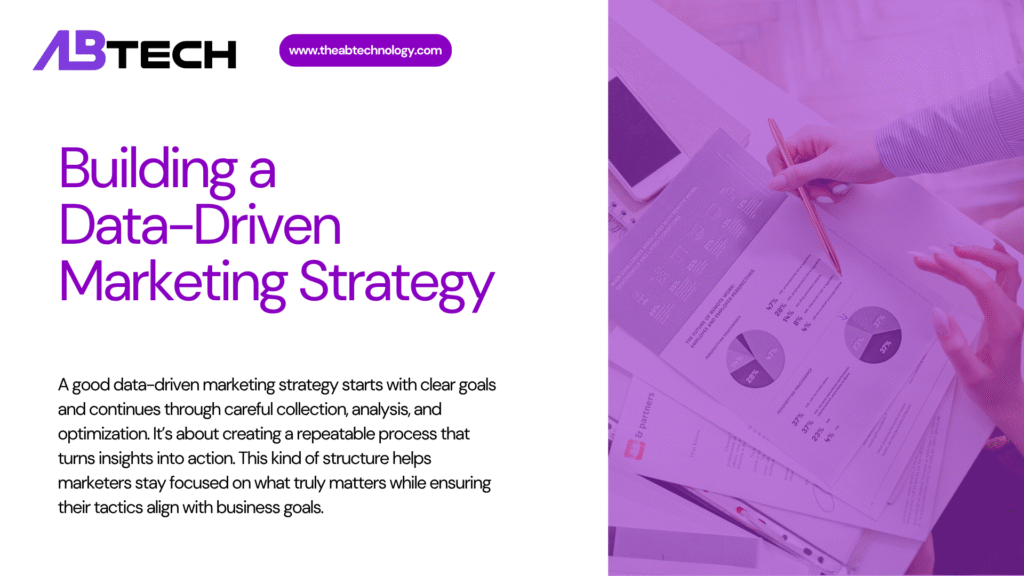
A good data-driven marketing strategy starts with clear goals and continues through careful collection, analysis, and optimization. It’s about creating a repeatable process that turns insights into action. This kind of structure helps marketers stay focused on what truly matters while ensuring their tactics align with business goals.
Define Your Goals
Know what you want to achieve before collecting data. Your objectives shape which metrics matter most and how you’ll measure success. Clear goals help your team stay aligned and prevent wasted effort on irrelevant information.
Gather the Right Information
Focus on collecting data that directly supports your goals, such as customer behavior, demographics, and engagement trends. Avoid unnecessary data that doesn’t add value. The quality of your data matters more than the quantity.
Analyze and Interpret Insights
You can use analytics tools to make sense of your data and find ways to improve your campaigns. Turning numbers into real insights takes both the right technology and human understanding. The more you know your audience, the better your campaigns will perform.
Adjust and Refine Regularly
Review your strategy often. Data-driven marketing works best when you continuously test, learn, and improve based on results. As customer preferences shift, regular analysis helps you stay relevant and competitive.
Data-Driven Marketing Examples
Real-world examples show how powerful data can be when used correctly. From global brands to local shops, everyone can benefit from insights that guide smarter marketing. The best part is that these techniques work across all industries, proving that data-driven approaches are not limited to big corporations.
Retail and E Commerce
Retailers study customer purchase data to send personalized product recommendations that drive repeat sales. For instance, an online store might suggest accessories that go with a customer’s last purchase. This small touch often increases sales and customer satisfaction.
Streaming Services
Streaming platforms often use viewing history to recommend shows that match each person’s preferences, helping keep viewers interested for longer. These recommendation systems rely on user behavior to keep audiences engaged and encourage them to stay subscribed.
Travel and Hospitality
Airlines and hotels track booking data to offer timely deals that match customer preferences and seasonal trends. They use this information to send reminders or exclusive discounts right when travelers are most likely to book.
Small Businesses
Even smaller brands use data from social media and email analytics to refine their messaging and build stronger connections with customers. By tracking what posts perform best, they can adjust content for better reach and engagement.
Data-Driven Marketing with AI
Artificial intelligence adds another layer to data-driven marketing. It helps marketers process large amounts of data faster and uncover patterns that humans might miss. AI tools make personalization, prediction, and automation easier and more accurate. As AI continues to advance, it’s becoming an essential part of every smart marketing strategy.
Predictive Insights
AI can analyze customer data to predict what people might want next. Marketers are able to develop proactive marketing as a result. Businesses may better anticipate demands with predictive information, which improves scheduling and increases conversions.
Automated Campaign Adjustments
Machine learning helps optimize campaigns in real time by testing headlines, visuals, and bidding strategies automatically. This ensures your marketing stays relevant and cost-efficient without constant manual changes.
Enhanced Personalization
AI improves customer happiness and loyalty by using extensive data to provide each consumer with offers and content that are specifically targeted to them. Automation can make every connection feel personalized and natural, whether it’s through chatbots or email sequences.
Working with Human Creativity
AI supports human decision-making. The most successful marketers use AI for insights but rely on creativity and empathy to tell compelling stories. This balance of data and emotion creates marketing that feels both smart and genuine.