
Educational technology careers are shaping the future of how students learn, teachers teach, and institutions operate. Professionals who are knowledgeable in both technology and education are more important than ever as schools grow to incorporate digital technologies. These positions at educational institutions range from data analysts and IT support professionals to learning technologists and instructional designers. The rise of remote learning has also created new opportunities for teachers who want to transition into online roles that combine pedagogy with tech expertise. Whether you are a teacher exploring EdTech jobs, a developer passionate about learning systems, or a professional interested in flexible remote positions, the education technology field offers a wide range of paths to explore. This article will look at the most promising EdTech jobs, what skills are required, and how educators can successfully pivot into these rewarding careers.
Rising Career Demand
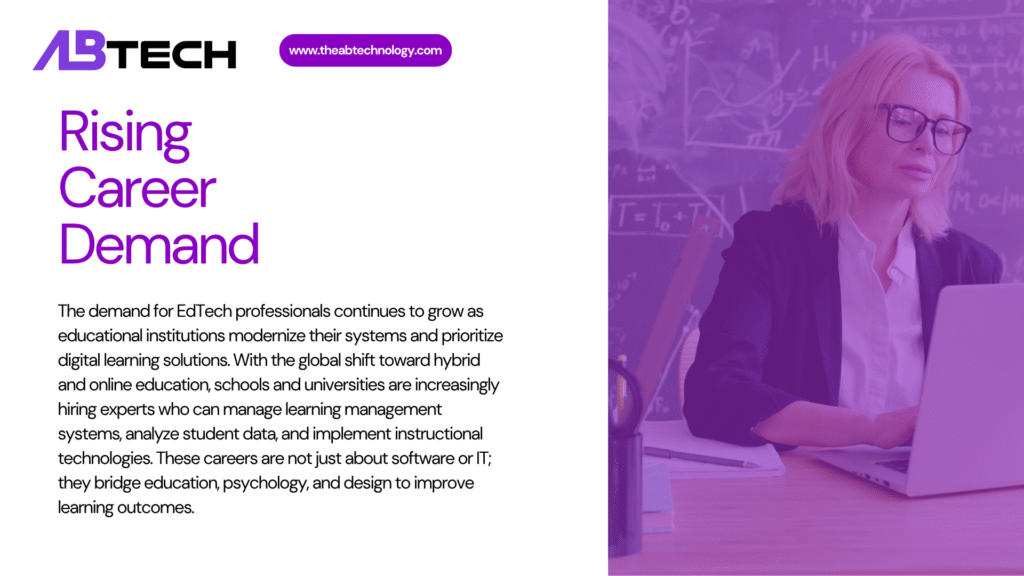
The demand for EdTech professionals continues to grow as educational institutions modernize their systems and prioritize digital learning solutions. With the global shift toward hybrid and online education, schools and universities are increasingly hiring experts who can manage learning management systems, analyze student data, and implement instructional technologies. These careers are not just about software or IT; they bridge education, psychology, and design to improve learning outcomes. Combining classroom experience with technological expertise gives one a significant edge in the employment market. These days, schools look for experts who can convert learning objectives into useful technological applications, such as developing interactive course materials or establishing online classrooms. As more students rely on online platforms, the need for technical support staff, cybersecurity specialists, and e-learning designers has grown rapidly. Additionally, government initiatives and private investments in EdTech innovation are fueling even more job openings worldwide.
Learning Transformation Impact
Technology has completely reshaped how learning takes place. Classrooms are no longer limited to four walls, and students can access lessons, assessments, and resources from anywhere with an internet connection. Teachers use data-driven insights to track student progress, while interactive tools make lessons more engaging. For example, virtual reality simulations allow students to explore historical sites or conduct science experiments safely online. Cloud-based systems enable collaboration between teachers and students in real time. The pandemic accelerated this transformation, pushing schools to adopt digital tools more quickly than ever. There are now more career choices for professionals who can handle, train, and support these technologies. EdTech is now an essential component of contemporary education rather than a niche.
Appeal of EdTech Work
Working in educational technology offers a unique blend of stability, innovation, and purpose. Being able to truly impact people’s learning experiences is what attracts many professionals to these positions. Competitive income, room for advancement, and the opportunity to remain at the forefront of technology are all provided by this industry. It is also perfect for anyone looking for work-life balance because of its remote and hybrid alternatives. For educators transitioning into tech roles, it’s a chance to apply their teaching skills in new ways while learning valuable digital competencies. On the other hand, tech professionals entering the education sector find satisfaction in contributing to meaningful projects that improve accessibility and learning efficiency.
Top EdTech Jobs
Teachers are uniquely positioned to thrive in educational technology roles because they understand both curriculum design and student engagement. Their firsthand classroom experience gives them insight into what tools and strategies work best for learning. As education becomes more digital, many schools now hire former teachers as instructional technologists, curriculum designers, or learning management system administrators. These positions let educators apply their creativity and organizational skills while gaining exposure to new technologies. Transitioning into EdTech doesn’t require giving up the passion for teaching—it simply changes the setting from a classroom to a digital platform.
Instructional Design Role
Instructional designers create engaging learning experiences by combining pedagogy and technology. To increase student retention, they create multimedia content, plan lessons, and create online courses. The transition is easier because teachers entering this position already have a solid understanding of how pupils learn. This line of work frequently includes creating interactive material with programs like Articulate, Captivate, or Canva. Instructional designers work closely with subject matter experts, IT teams, and administrators to ensure digital courses align with academic standards. The demand for this role continues to rise as more institutions invest in e-learning programs and corporate training.
Educational Tech Support
Educational technologists help teachers and students use digital tools effectively. They manage systems such as Google Workspace for Education, Canvas, or Blackboard, ensuring smooth operation across classrooms. These specialists train educators on how to integrate technology into their teaching methods and troubleshoot technical issues. The role requires strong communication skills, patience, and a solid grasp of both pedagogy and IT systems. Teachers who are comfortable experimenting with digital tools often find this path rewarding. As technology adoption grows in schools, the demand for these specialists remains strong.
Data Analysis Role
Data plays a huge role in modern education, helping schools measure performance and make informed decisions. Education data analysts collect and interpret data from student assessments, attendance, and digital engagement tools. They transform these insights into actionable strategies that improve outcomes. Teachers with analytical skills or an interest in research often excel here because they understand the context behind the numbers. This position requires some knowledge of statistics and software like Excel, Power BI, or Tableau. It’s one of the fastest-growing areas in EdTech and offers strong earning potential for professionals who can blend analytical and educational expertise.
Remote EdTech Roles
Remote EdTech roles have become more accessible as schools embrace online platforms and virtual classrooms. Teachers, IT professionals, and designers can now collaborate from anywhere, managing learning management systems or designing e-courses remotely. Companies offering online education programs often hire specialists to maintain their systems, train instructors, and develop new learning content. Many professionals enjoy the flexibility that remote EdTech jobs provide, allowing them to balance family life or pursue additional certifications while working. Remote positions are especially popular among educators who want to continue impacting learning without being tied to a physical school location.
Common Remote Jobs
Some of the most common remote jobs today include online instructors, instructional designers, content creators, and technical support specialists. These roles often involve creating digital materials, delivering virtual lessons, or assisting users with technical issues. Nowadays, a large number of workers in fields including technology, marketing, education, and customer service work remotely. The emergence of internet tools and platforms has facilitated remote work management, knowledge sharing, and collaboration. Freelancers and full-time employees alike enjoy the flexibility that remote work provides, allowing them to balance personal and professional commitments. It is anticipated that remote work will continue to play a significant role in the modern workforce as businesses continue to adopt digital processes.
Skills for Remote Work
Success in remote EdTech work requires strong communication, self-discipline, and digital literacy. Professionals must be comfortable managing tasks independently while collaborating through tools like Zoom, Slack, or Trello. Time management is essential, as projects often involve coordinating with different departments or time zones. Additionally, adaptability plays a huge role because technology evolves quickly in this field. Continuous learning, attending webinars, and earning certifications can help individuals stay relevant and competitive in the remote job market.
Technology in Education
Technology is now an integral part of school operations. From IT support staff to software developers, tech roles in education institutions are essential to keeping systems secure and efficient. Schools hire network administrators to maintain infrastructure, cybersecurity specialists to protect sensitive data, and developers to build educational applications. Universities also employ specialists who focus on instructional design, data management, and research technology. Working in these settings allows professionals to contribute to meaningful projects while enjoying job stability and benefits that often come with educational employment.
IT Support Roles
Every modern school relies on a strong network system to run smoothly. IT technicians ensure that teachers and students have uninterrupted access to resources like Wi-Fi, projectors, and online databases. These professionals are also responsible for maintaining cybersecurity and protecting student information. The role involves troubleshooting, system updates, and supporting software used for learning. People with technical backgrounds often find these roles rewarding because they directly support education’s mission to deliver knowledge efficiently and safely.
University Data Systems
Universities increasingly depend on technology for research management, student tracking, and data analytics. Specialists in these positions develop or maintain systems that help faculty conduct studies and manage administrative tasks more effectively. Data system administrators ensure research information remains accurate, accessible, and secure. These roles often require knowledge of database management and familiarity with compliance standards. Working in a university setting also provides opportunities for collaboration with academics, making it ideal for those who value intellectual and technical challenges combined.
Preparing for EdTech Work
Getting started in educational technology requires a mix of technical skills and educational knowledge. A lot of experts with degrees in computer science, education, or instructional design enter the industry. However, short courses and certifications in learning management systems, UX design, or data analytics can also open doors. Building a portfolio of digital projects or online teaching experiences can help applicants stand out. Networking with professionals through LinkedIn groups or EdTech conferences can also lead to valuable job opportunities. The field rewards lifelong learners who stay curious and keep up with the latest digital tools.
Certifications and Training
Earning certifications can help establish credibility in the EdTech field. Programs like Google Certified Educator, Microsoft Innovative Educator, and CompTIA IT certifications are highly regarded. Online platforms such as Coursera, edX, and LinkedIn Learning also offer specialized training in instructional design and educational technology. These programs help professionals gain hands-on experience with the tools and concepts used in real classrooms and online environments.
Building Experience Network
Experience is one of the best ways to stand out in the EdTech field. Volunteering to manage digital projects at schools, creating sample online lessons, or assisting with LMS setup can help build a strong resume. Joining online EdTech communities allows professionals to exchange knowledge and stay informed about trends and job openings. Opportunities that might not be posted on job boards can be found through networking. These connections and experiences have the potential to lead to steady, rewarding jobs in instructional technology over time.
Future of EdTech Careers
The future of EdTech careers looks promising as technology continues to shape education systems worldwide. Artificial intelligence, data analytics, and immersive technologies such as virtual and augmented reality are expected to redefine how people learn and teach. Professionals who adapt early and develop expertise in these areas will find themselves in high demand. Remote work will likely remain a major part of the industry, giving professionals flexibility while expanding access to global job opportunities. As schools and universities continue investing in digital infrastructure, EdTech will stay one of the most stable and impactful career paths in the years ahead.
Emerging Technologies in Education
Emerging technologies like AI-driven tutoring systems, machine learning analytics, and virtual classrooms are creating new possibilities for personalized education. These tools help teachers track student progress in real time and adjust lessons based on individual learning styles. Virtual and augmented reality allow students to explore complex topics through immersive experiences, making lessons more engaging and interactive. Professionals with expertise in these technologies are becoming crucial for educational institutions looking to update their classrooms. The demand for experts who can create, manage, and improve these systems will only increase as technology becomes more ingrained in regular instruction. Those who embrace continuous learning and stay updated with new tech trends will find rewarding opportunities in the evolving EdTech landscape.
Preparing for Future Roles
To prepare for the future of EdTech careers, professionals should focus on developing both technical and pedagogical skills. Gaining expertise in areas like data analysis, instructional design, and artificial intelligence will provide a strong advantage. Certifications in digital learning platforms and learning management systems are also highly valued by many businesses. In this area, soft skills like problem-solving, communication, and flexibility are still crucial. Networking through EdTech conferences, online courses, and professional groups can help individuals stay informed about industry trends. Building a portfolio that showcases innovative projects or digital solutions can also increase job prospects. As the industry continues to evolve, those who invest in lifelong learning will stay ahead and secure long-term success in the education technology sector.