
Tech in healthcare refers to the use of digital tools, machines, and systems that support medical services and patient care. These tools help medical teams manage information, support diagnosis, and assist with treatment planning. Over time, healthcare settings have adopted more technology to respond to growing patient needs. Many facilities rely on digital records, connected devices, and data systems to manage daily tasks. This shift helps teams track patient history with more clarity and consistency.
Patients experience shorter wait times and clearer communication as a result. Medical staff gain better access to information during consultations and follow-ups. Healthcare providers face pressure to deliver care safely and accurately. Technology supports this goal through structured systems and automated processes. These tools help reduce paperwork and manual entry. Care delivery becomes more organized across departments. Patients gain more visibility into their own health information. This growing reliance shows why tech in healthcare matters for both patients and providers.
Tech in Healthcare and Patient Care
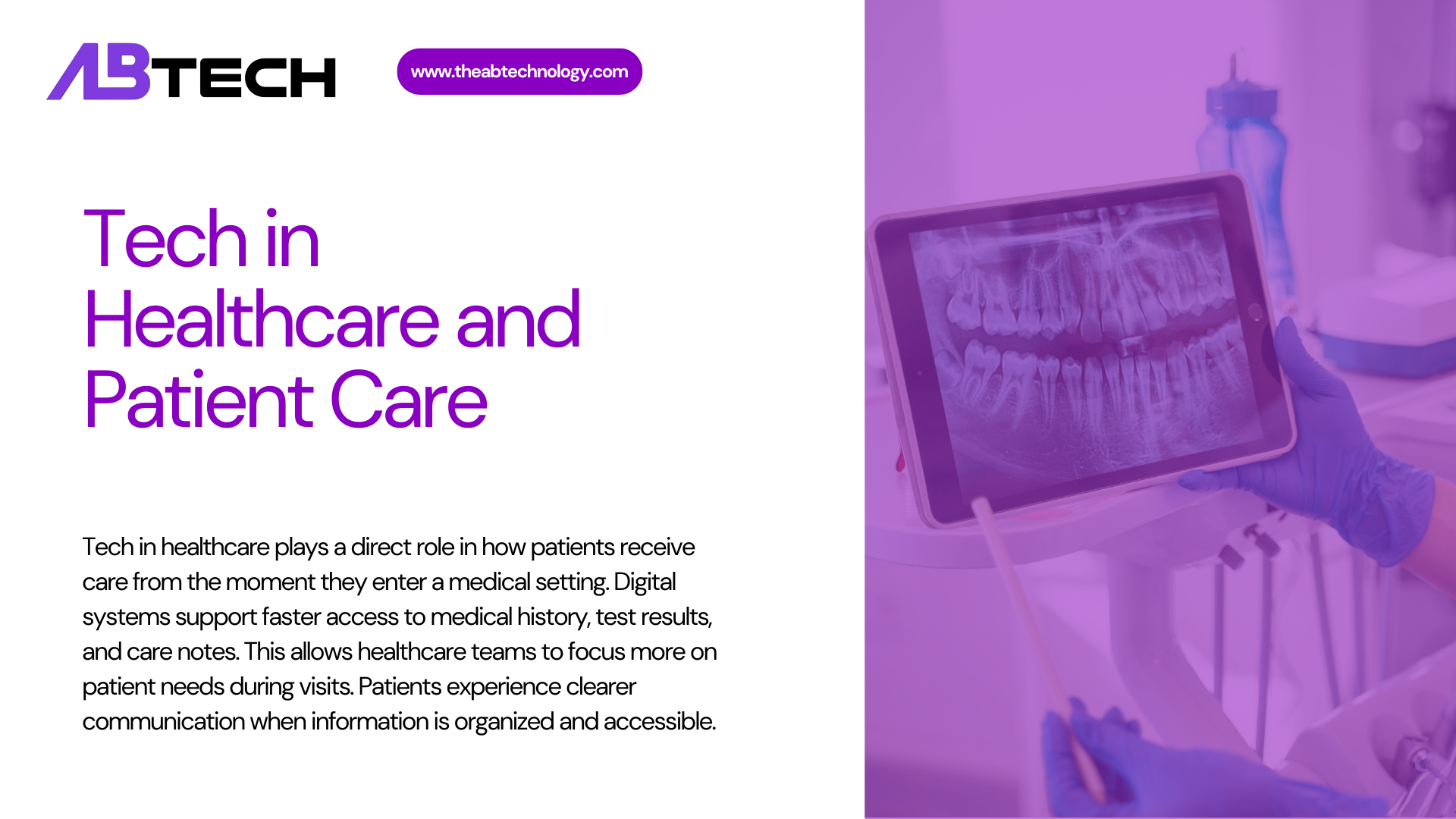
Tech in healthcare plays a direct role in how patients receive care from the moment they enter a medical setting. Digital systems support faster access to medical history, test results, and care notes. This allows healthcare teams to focus more on patient needs during visits. Patients experience clearer communication when information is organized and accessible. Technology helps reduce delays tied to paperwork and manual processes. Care teams can coordinate steps more smoothly during treatment. Alerts and reminders help prevent missed actions during care. Patient progress can be tracked across visits with more consistency. This supports follow-up plans that feel organized and clear. Patients often feel more informed about what is happening during care. Technology also supports safety checks during treatment steps. Care delivery becomes more predictable for both patients and providers. This steady structure supports better patient experiences overall.
Better Treatment Accuracy
Modern medical tools support doctors during diagnosis and treatment planning. Imaging systems provide detailed views of internal structures. Digital testing tools help identify conditions at earlier stages. Treatment plans become clearer with access to detailed patient data. Medical teams can compare past and current results more easily. This supports better decision-making during care. Errors related to missing information occur less often. Diagnostic tools support consistent evaluations across facilities. Patients benefit from clearer explanations of their condition. Follow-up care becomes more focused and organized. Treatment adjustments rely on tracked progress. Providers feel more confident in clinical choices. This leads to care that feels more consistent for patients.
Smoother Daily Operations
Modern medical tools support doctors during diagnosis and treatment planning. Imaging systems provide detailed views of internal structures. Digital testing tools help identify conditions at earlier stages. Treatment plans become clearer with access to detailed patient data. Medical teams can compare past and current results more easily. This supports better decision-making during care. Errors related to missing information occur less often. Diagnostic tools support consistent evaluations across facilities. Patients benefit from clearer explanations of their condition. Follow-up care becomes more focused and organized. Treatment adjustments rely on tracked progress. Providers feel more confident in clinical choices. This leads to care that feels more consistent for patients.
Tech Use Across Roles
In healthcare, many roles work together to ensure patients receive proper care, and technology helps connect these roles through shared systems and communication tools. Doctors, nurses, technicians, and administrative staff can all access the same information, reducing mistakes during transitions between departments. Information flows more smoothly, so employees spend less time tracking down updates from other teams. Clear records help everyone stay accountable and on the same page, while communication tools keep teams updated during busy shifts.
Shared dashboards make it easier to coordinate tasks and manage daily responsibilities, and training resources support consistent practices across all staff levels. New team members can learn procedures faster with digital support, and organized workflows with readily available information make teamwork more efficient. Overall, technology allows healthcare professionals to focus more on patients and less on administrative challenges, keeping care running steadily and safely.
Shared Health Records
Electronic health records allow medical teams to access patient history quickly. Doctors, nurses, and specialists can view the same information. This supports consistent care across visits. Test results stay linked to patient profiles. Updates become available without repeated data entry. Patients avoid repeating the same details at each visit. Records support clearer communication during referrals. Care teams can review past treatments easily. Medication histories stay more accurate. This reduces confusion during transitions of care. Access controls protect sensitive information. Staff follow clear documentation standards. Health records support coordinated care across systems.
Remote Health Devices
Wearable devices track basic health indicators throughout the day. Patients can share readings with healthcare teams remotely. This supports care outside clinic settings. Monitoring supports early awareness of health changes. Patients stay engaged with their own health data. Providers receive updates without in-person visits. Long-term tracking supports better trend analysis. This supports care for chronic conditions. Patients feel more connected to care teams. Data support timely follow-up when needed. Remote tools support care access in rural areas. Healthcare teams manage more patients efficiently. Monitoring supports steady care over time.
Daily Clinical Support
Technology supports routine tasks during patient visits. Digital charts reduce the time spent searching for records. Prescription systems reduce handwriting errors. Appointment reminders support attendance rates. Clinical tools support consistent care steps. Staff access guidelines during consultations. Communication tools support team updates quickly. Task lists help manage patient care priorities. Alerts support safety checks during treatment. Documentation stays organized throughout the day. Clinical routines feel more predictable. Staff focus on patient interaction. This supports steady daily workflows.
Examples of Healthcare Technology
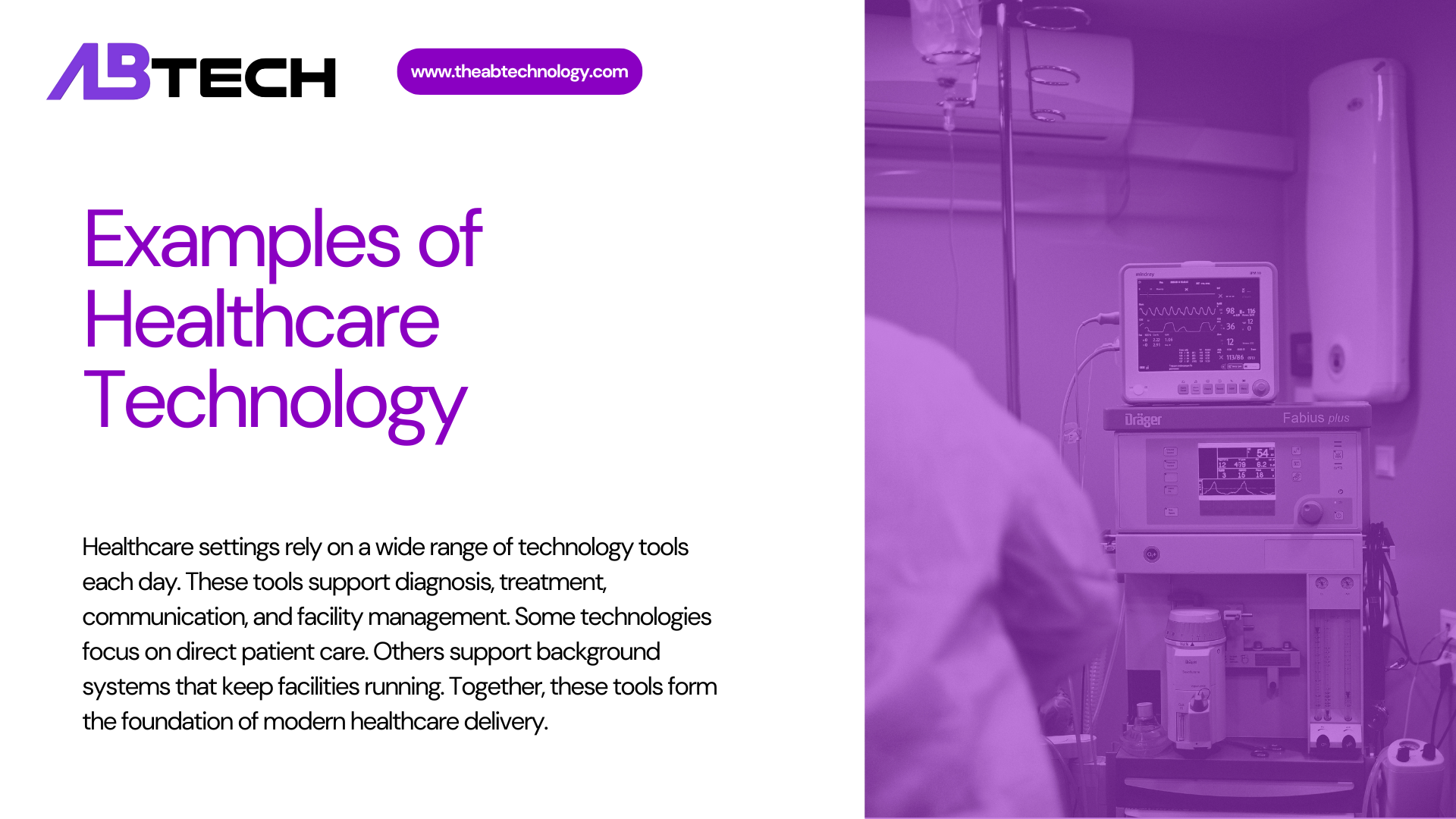
Healthcare settings rely on a wide range of technology tools each day. These tools support diagnosis, treatment, communication, and facility management. Some technologies focus on direct patient care. Others support background systems that keep facilities running. Together, these tools form the foundation of modern healthcare delivery. Medical teams choose tools based on care needs and setting size. Many technologies work quietly behind the scenes. Patients may not always notice them during visits. Staff rely on these systems for accuracy and consistency. Equipment tracking supports readiness during emergencies. Communication systems support timely updates across teams. Digital tools support planning before patient visits. These examples show how technology supports daily healthcare operations.
Surgical Assistance Systems
Robotic systems support precision during complex procedures. Surgeons control tools with high accuracy. Smaller movements reduce strain during long procedures. Systems support consistent motion control. Imaging guides surgical planning before procedures. During surgery, tools support steady positioning. Recovery times may be shortened through targeted approaches. Surgical teams work with clear visual support. Training tools support skill development. Procedures become more standardized across teams. Patient outcomes benefit from controlled techniques. Safety protocols stay built into systems. These systems support modern surgical care.
Virtual Care Platforms
Telehealth tools allow patients to consult providers remotely. Video visits support routine check-ups. Patients save travel time and expenses. Access improves for people in remote areas. Providers review symptoms through digital communication. Follow-up visits become easier to schedule. Mental health support becomes more accessible. Patients manage minor concerns without clinic visits. Care continuity improves between appointments. Digital records support visit summaries. Secure communication protects patient privacy. Care remains structured outside clinics. Virtual care supports ongoing access.
Smart Care Facilities
Hospitals use connected systems to manage equipment and spaces. Sensors track room availability and usage. Environmental controls support patient comfort. Equipment tracking supports timely maintenance. Staff receive alerts for system updates. Safety monitoring supports patient protection. Energy use stays managed across buildings. Emergency response systems stay connected. Staff locate tools quickly when needed. Infrastructure supports organized care delivery. Patients experience smoother stays. Facilities manage resources with clarity. Smart systems support daily operations.
Benefits for Patients and Providers
Tech in healthcare offers clear benefits for both patients and medical professionals. Patients gain easier access to information and services. Providers gain tools that support organization and clarity. This balance supports better care experiences overall. Technology reduces repetitive tasks for staff. Patients experience smoother visits and follow-ups. Care plans feel more structured with digital support. Providers manage time more effectively during busy schedules. Communication improves between patients and care teams. Records help maintain continuity across visits. Patients feel more involved in their own care. Providers feel supported by reliable systems. These shared benefits strengthen care delivery across settings.
Access and Personal Care
Technology supports easier access to medical services. Appointment scheduling becomes more flexible. Patient portals allow record viewing. Communication with providers feels more direct. Care plans reflect personal health data. Monitoring supports individual health patterns. Patients feel informed about their care. Providers tailor guidance using tracked data. Follow-up plans stay clearer. Educational materials support patient understanding. Care feels more personal across visits. Engagement increases through shared information. This supports stronger care relationships.
Privacy and Ethics
Digital systems store sensitive health information. Privacy protection remains a key responsibility. Access controls limit who views records. Compliance rules guide data handling practices. Staff receive training on information protection. Patients expect transparency around data use. Ethical considerations guide system design. Secure storage protects against misuse. Audit trails track access history. Policies guide responsible data sharing. Patients maintain trust in care systems. Providers balance access with protection. Ethics remain central to healthcare technology.
Future of Healthcare Technology
Healthcare continues to adjust as technology becomes more common in care settings. New tools enter hospitals, clinics, and home care environments. Healthcare teams prepare for ongoing changes in daily workflows. Training and adaptation play a key role in this process. Patients become more familiar with digital care options. Expectations around access and communication continue to shift. Systems focus on flexibility to meet changing needs. Data use supports planning and care improvement. Providers explore ways to balance technology with personal care. Policies guide responsible adoption across organizations. Collaboration shapes how tools are used in practice. Long-term planning supports steady progress. The future of healthcare remains closely tied to technology growth.
Emerging Care Tools
New technologies continue to appear across healthcare. Data analysis tools support population health planning. Predictive systems support early intervention. Virtual training tools support staff education. Automation supports repetitive tasks. Home-based care tools continue to grow. Diagnostic tools become more refined. Communication systems support faster coordination. Data sharing supports research efforts. Patients benefit from broader care options. Providers adapt tools to real needs. Growth continues across care settings. These tools shape future healthcare practices.
Digital Care Adoption
Healthcare teams adjust to digital workflows over time. Training supports staff confidence with tools. Policies guide responsible system use. Younger professionals enter digital-ready environments. Experienced staff adapt through structured support. Collaboration improves through shared platforms. Care delivery continues across digital channels. Leadership supports thoughtful adoption. Feedback shapes system improvements. Teams balance human care with digital tools. Patient interaction remains central to care. Digital approaches become routine. Healthcare continues to evolve with technology.