
Technology has become a central part of modern healthcare, influencing how care is delivered, recorded, and experienced by both patients and providers. Medical settings now rely on digital tools for communication, diagnosis, and long-term care planning. These changes affect hospitals, clinics, and home-based care in noticeable ways. Patients often experience quicker access to services through digital platforms. Healthcare professionals rely on computer systems to manage growing amounts of clinical data. Mobile tools have changed how people track symptoms and communicate with care teams. Connected devices now support daily monitoring outside clinical settings. Data sharing plays a larger role in treatment planning and follow-up care. At the same time, new challenges have emerged alongside these tools. Privacy concerns remain a major topic across healthcare systems. Some clinicians face pressure from constant digital alerts and system updates. Training demands continue to rise as tools grow more complex. Healthcare outcomes now depend on both human skill and digital support working side by side.
Mobile and Computer Technology
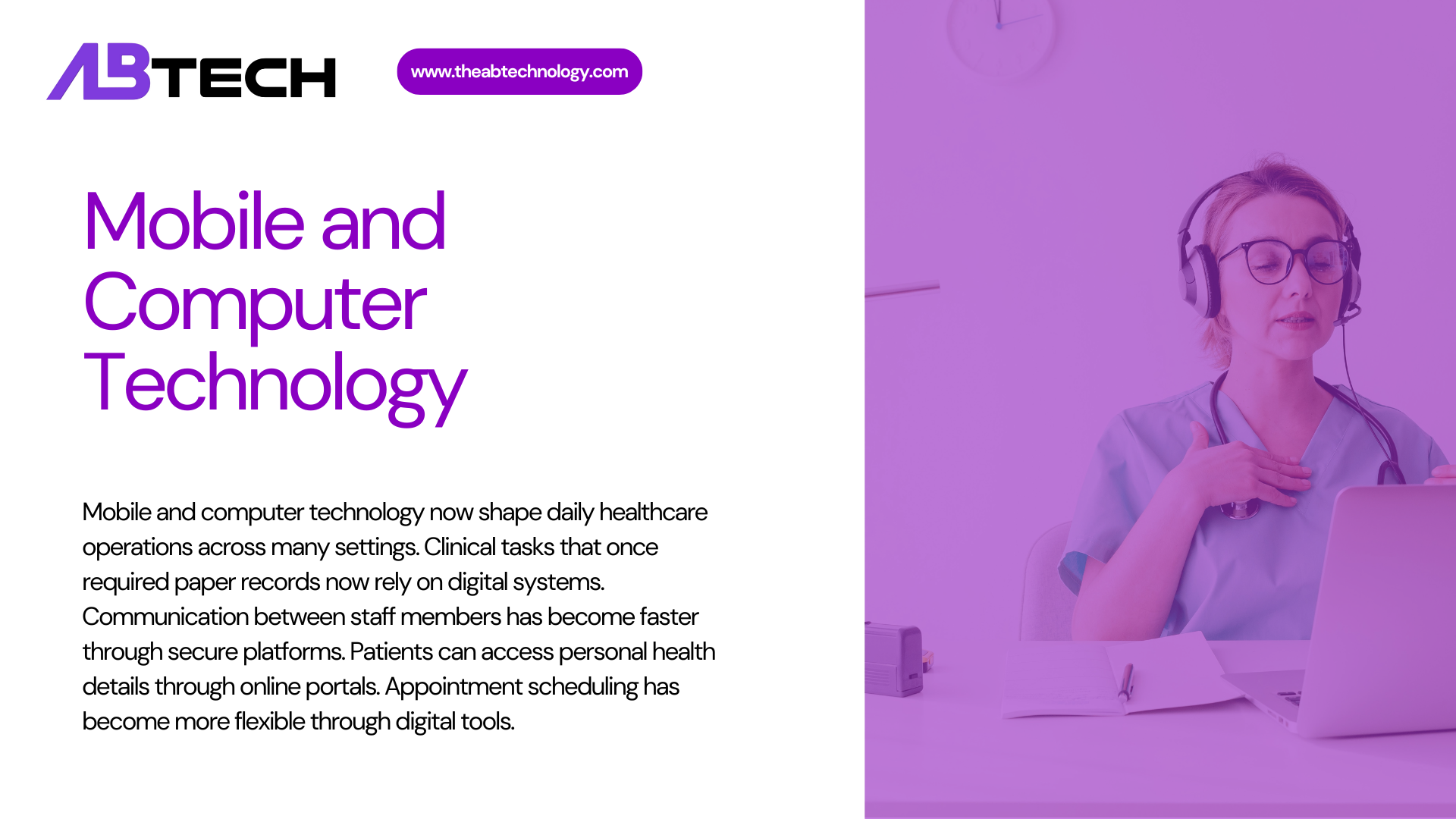
Mobile and computer technology now shape daily healthcare operations across many settings. Clinical tasks that once required paper records now rely on digital systems. Communication between staff members has become faster through secure platforms. Patients can access personal health details through online portals. Appointment scheduling has become more flexible through digital tools. Medical imaging and lab results are shared more quickly across departments. Care teams rely on computer systems to track treatment plans. Mobile devices allow clinicians to respond to patient needs outside traditional settings. Remote consultations have become part of routine care delivery. Data storage systems support long-term patient histories. Clinical workflows have shifted to support digital documentation. Staff training now includes digital literacy as a core skill. Care delivery continues to adapt as technology becomes more present.
Mobile Tools for Communication
Mobile technology supports real-time communication between patients and care providers. Messaging tools allow patients to share updates without visiting a clinic. Video consultations support follow-up care for ongoing conditions. Mobile alerts help patients remember appointments and medication schedules. Health tracking apps allow symptom reporting from home. Clinicians receive updates more quickly through mobile dashboards. Care coordination improves when updates are shared instantly. Patients often feel more connected to their care teams. Mobile access supports care for those with limited mobility. Remote communication reduces travel demands for many patients. Follow-up care becomes easier to manage through mobile platforms. Access to care expands beyond physical clinic walls. These tools support ongoing engagement throughout treatment.
Computers in Clinical Support
Computer technology supports diagnostics, documentation, and routine clinical tasks. Digital imaging systems allow clearer views of medical scans. Lab results are processed and stored through computer networks. Electronic records replace handwritten notes in many settings. Care teams access patient histories through secure systems. Automated scheduling reduces administrative workload. Clinical documentation becomes more consistent through digital templates. Computer systems support billing and reporting tasks. Alerts help flag potential medication issues. Treatment plans are tracked across multiple visits. Data accuracy improves with standardized entry systems. Workflow coordination becomes more predictable. Computers now support nearly every clinical function.
Connected Care Systems
Connected devices help healthcare teams work more smoothly by sharing data across systems. Monitoring tools collect patient information beyond clinics and hospitals. Sensors track vital signs over extended periods without disruption. This data appears quickly on clinical dashboards. Care teams focus on patterns over time rather than isolated readings. Early alerts help providers respond before issues grow. Automated data collection reduces the need for manual entry. Patients gain a clearer view of daily health changes. Clinicians follow patient progress without constant office visits. Device data helps shape care plans that reflect real needs. Communication between devices keeps everyone informed. Smart systems encourage early action rather than reactive care. These tools extend healthcare into everyday environments.
Positive Effects of Healthcare Technology
Technology has introduced many benefits across healthcare delivery and patient care. Diagnostic tools support faster identification of health concerns. Digital records allow quick access to medical histories. Communication tools reduce delays between visits. Telehealth services expand access for remote populations. Wearable devices support daily health tracking. Automated reminders support treatment adherence. Data analysis supports better care planning. Patients feel more informed through access to records. Care teams collaborate more easily through shared systems. Long-term monitoring supports chronic condition management. Technology supports early intervention strategies. Access to care becomes more flexible. These benefits continue to shape modern healthcare.
Faster Diagnostic Support
Digital imaging and data analysis support quicker diagnoses. Imaging tools provide detailed internal views. Automated analysis highlights patterns in scans. Clinicians review results with greater clarity. Diagnostic reports are shared more quickly across teams. Early detection supports timely treatment decisions. Digital records store diagnostic history for future reference. Data comparison supports tracking over time. Diagnostic accuracy improves through consistent imaging quality. Care delays decrease with faster processing. Clinicians spend less time waiting for results. Patients receive answers sooner. This supports confidence in care decisions.
Broader Access to Care
Telehealth services increase access to healthcare services. Remote consultations reduce travel needs. Rural patients connect with specialists more easily. Follow-up visits become more convenient. Monitoring tools support home-based care. Virtual visits support ongoing treatment plans. Access improves for those with mobility limits. Scheduling becomes more flexible through online platforms. Care continuity improves between visits. Emergency consultations receive quicker responses. Digital access supports preventive care. Patients engage with providers more regularly. This expands reach across diverse populations.
Patient Engagement Tools
Wearable devices and mobile apps support patient engagement. Daily tracking builds awareness of health patterns. Patients monitor activity and vital signs. Visual data helps patients understand progress. Engagement improves through direct feedback. Mobile reminders support daily care routines. Patients take part in self-monitoring. Shared data supports discussions during visits. Engagement leads to informed care choices. Consistent tracking supports long-term goals. Patients feel involved in their care journey. Communication improves through shared data. Engagement supports better care experiences.
Challenges of Healthcare Technology
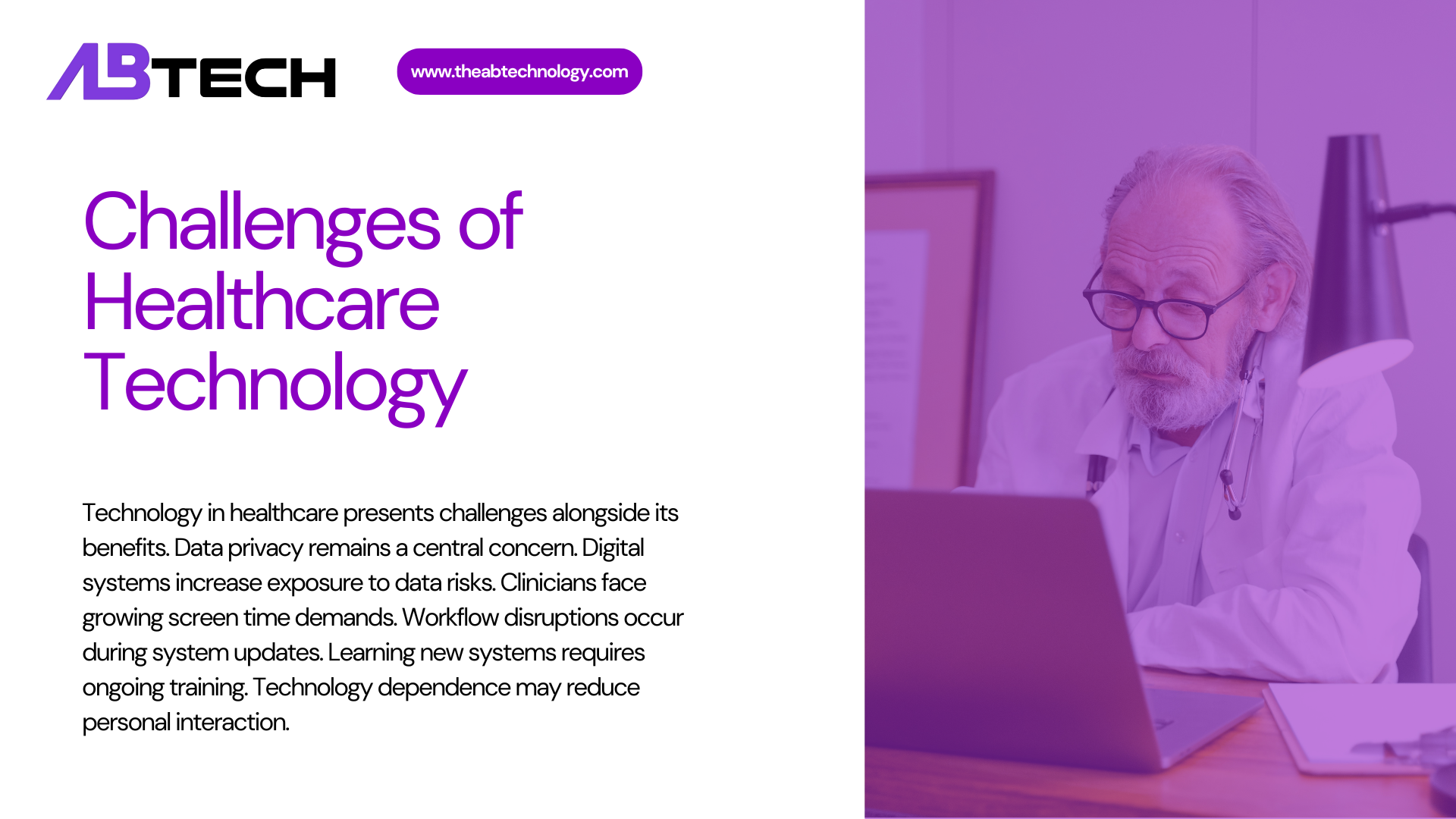
Technology in healthcare presents challenges alongside its benefits. Data privacy remains a central concern. Digital systems increase exposure to data risks. Clinicians face growing screen time demands. Workflow disruptions occur during system updates. Learning new systems requires ongoing training. Technology dependence may reduce personal interaction. Alert fatigue affects daily clinical work. System outages disrupt care delivery. Patients may struggle with digital access. Older users face usability barriers. Stress increases with constant digital demands. These challenges require thoughtful management.
Patient Data Protection
Protecting patient data remains a major concern. Digital records store sensitive information. Cyber risks increase with data sharing. Unauthorized access threatens patient trust. Security measures require constant updates. Staff training supports safe data handling. Access controls limit data exposure. Monitoring systems detect unusual activity. Breaches affect care credibility. Privacy laws shape system design. Patients expect confidentiality at all times. Trust depends on data protection efforts. Security remains an ongoing responsibility.
Technology and Human Care
Overreliance on technology affects personal interaction. Screen-focused tasks reduce face-to-face time. Patients value personal attention during care. Clinicians balance documentation with conversation. Technology may distract during consultations. Communication quality may suffer under time pressure. Human judgment remains essential in care decisions. Emotional support cannot be automated. Relationship building supports treatment adherence. Care satisfaction links to personal connection. Training supports balanced technology use. Awareness helps preserve patient relationships. Human care remains central to healthcare.
Digital Stress for Clinicians
Digital systems contribute to stress among healthcare workers. Constant alerts interrupt clinical focus. Documentation demands extend work hours. System updates require frequent adjustment. Learning curves affect productivity. Multitasking across platforms increases fatigue. Data entry takes time away from patients. Technical issues create frustration. Burnout risk rises with digital overload. Support systems help reduce pressure. Training improves confidence with tools. Workflow design affects daily stress. Managing digital demands supports staff wellbeing.
Health Information Technology and Care Quality
Health information technology supports care quality through organized data use. Electronic records centralize patient information. Care teams access updated records quickly. Information sharing supports coordinated treatment. Data accuracy supports safer care decisions. Clinical tools support monitoring over time. Reporting tools track patient outcomes. Communication improves across care settings. Digital records reduce duplicate testing. Long-term histories support informed planning. Care transitions become smoother. Quality tracking supports accountability. Information systems play a key role in care quality.
Electronic Records and Coordination
Electronic records support care coordination across providers. Patient histories are available in one system. Test results are shared across departments. Care plans remain consistent between visits. Referrals include the complete clinical context. Medication lists stay updated. Errors decrease with shared records. Communication gaps become less common. Emergency care teams access vital information. Follow-up care aligns with prior treatment. Coordination supports safer care delivery. Patients avoid repeating information. Records support continuity across settings.
Decision Support Tools
Clinical decision tools support treatment precision. Data analysis supports care planning. Alerts highlight potential risks. Monitoring tools track patient progress. Follow-up care becomes more structured. Treatment adjustments rely on updated data. Tools support long-term condition management. Care teams review trends over time. Decision support reduces oversight risks. Standardized guidance supports consistency. Clinicians retain final judgment. Tools support informed decisions. Precision improves with data support.
System Barriers and Learning
System fragmentation affects daily workflows. Multiple platforms create data silos. Staff training requires ongoing effort. Learning new tools takes time. Inconsistent interfaces slow adoption. Technical issues disrupt care delivery. Resource limits affect system upgrades. Staff resistance may slow changes. Workflow redesign supports smoother use. Training improves system confidence. Support teams assist during transitions. Barriers require practical solutions. Ongoing adjustment supports long-term use.
Future Healthcare Technologies
Emerging technologies continue to shape healthcare direction. Data-driven tools support personalized care. Secure data exchange gains attention. Faster networks support real-time communication. Emergency care benefits from quicker data access. Rural care sees improved connectivity. Predictive tools support early intervention. Automation supports routine monitoring tasks. Data transparency supports patient trust. Future tools focus on patient-centered care. Care delivery becomes more responsive. Technology supports proactive health management. These trends point toward ongoing change.
AI in Personalized Care
Artificial intelligence supports personalized treatment planning. Data analysis identifies individual patterns. Treatment plans adjust to patient needs. Monitoring tools track response over time. Predictive insights support early care changes. Clinicians review AI-supported recommendations. Personal data supports tailored approaches. Follow-up care becomes more precise. Risk assessment improves through pattern analysis. Care plans reflect ongoing data input. Human oversight remains central. AI supports decision-making processes. Personal care gains data support.
Blockchain and Data Trust
Blockchain supports secure data exchange in healthcare. Records remain traceable across systems. Data sharing becomes more transparent. Access permissions protect patient privacy. Audit trails support accountability. Data tampering becomes harder. Trust improves through verified records. Cross-provider sharing becomes safer. Patient consent is easier to track. Secure exchange supports coordinated care. Data integrity remains protected. Transparency supports confidence. Secure systems support future data use.
Faster Networks in Care
Advanced networks support faster healthcare communication. Real-time data sharing supports emergency care. Rural clinics access specialist support. Monitoring devices transmit data quickly. Mobile units connect during emergencies. Low-latency networks support remote procedures. Data reliability improves response times. Care coordination improves during critical moments. Network speed supports live monitoring. Emergency teams receive updates instantly. Remote care becomes more practical. Connectivity supports timely decisions. Faster networks expand care reach.