
Technology is reshaping how property is bought, sold, and managed by changing how people search, communicate, and make decisions. Buyers now expect quick access to listings, clear visuals, and accurate details before making contact. Sellers rely on digital exposure to reach a wider audience without relying on physical visits alone. Agents depend on online systems to track inquiries and follow up with prospects. Property data is easier to access than ever, which helps people compare prices and locations with confidence. Market research no longer relies on guesswork or outdated reports. Digital records allow smoother handling of documents and timelines. Communication moves faster through messaging tools and shared platforms. Property marketing reaches buyers across different locations with fewer limits. Real estate work now depends heavily on digital habits formed by everyday online activity. These changes affect residential and commercial property alike. The property market continues to shift as tools grow more common. Tech now shapes expectations across every stage of a transaction.
Why Property Tech Matters
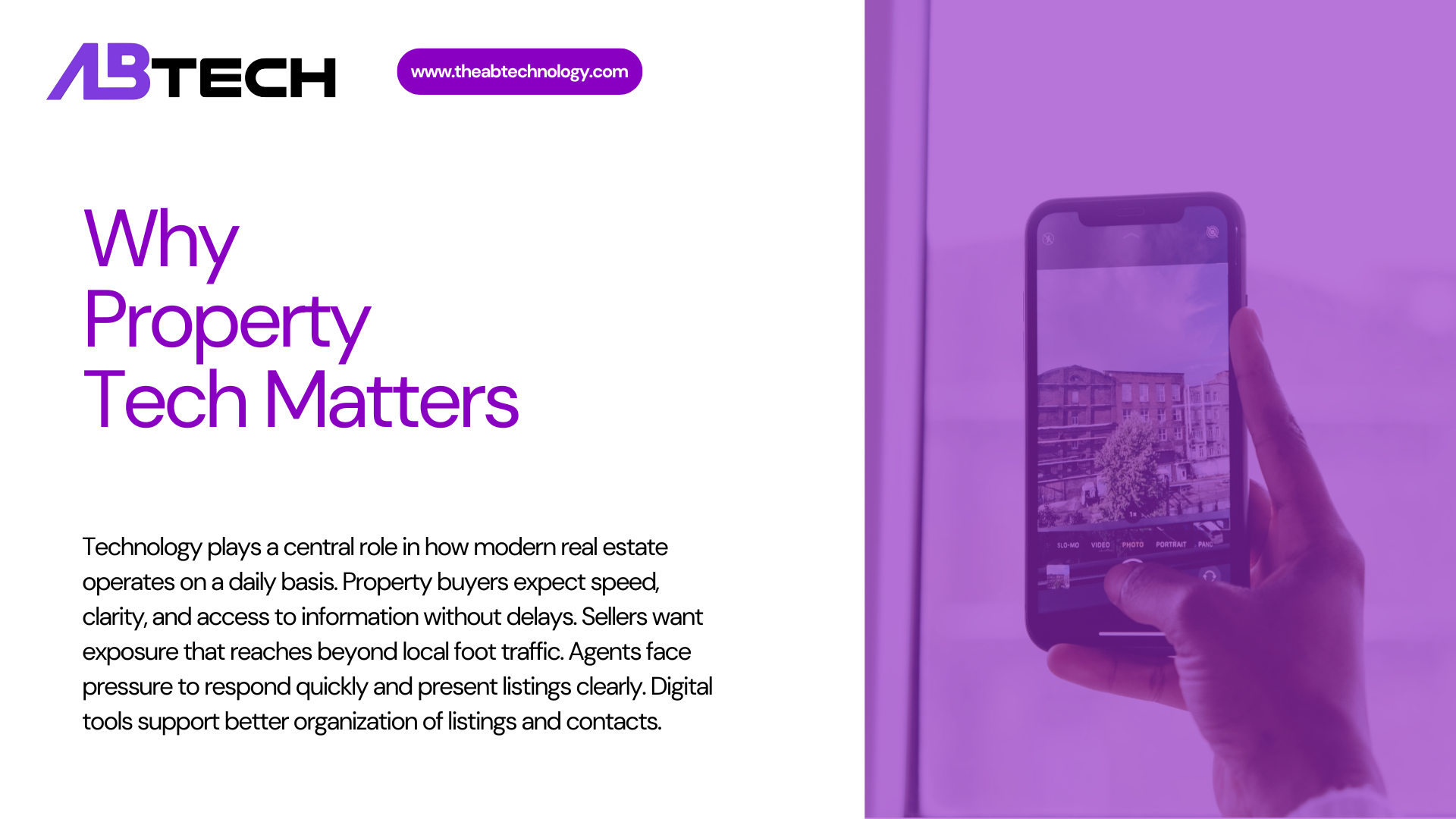
Technology plays a central role in how modern real estate operates on a daily basis. Property buyers expect speed, clarity, and access to information without delays. Sellers want exposure that reaches beyond local foot traffic. Agents face pressure to respond quickly and present listings clearly. Digital tools support better organization of listings and contacts. Online access allows buyers to research neighborhoods before scheduling visits. Market transparency grows as data becomes easier to compare. Real estate professionals rely on systems that track activity and interest. Property decisions involve more research than in the past. Tech helps reduce miscommunication across transactions. Clients notice when processes feel slow or unclear. The industry now depends on tech to meet these expectations. Real estate work feels incomplete without digital support.
Meeting Buyer Expectations
Modern buyers rely on online search as the first step in property hunting. Photos and videos shape first impressions before any visit takes place. Floor plans help people decide whether a space fits their daily needs. Price history adds context to current listings. Buyers expect fast replies once they show interest. They prefer clear scheduling options that fit busy routines. Digital forms save time during early discussions. Online reviews influence trust in agents and listings. Buyers feel more control when information is easy to access. Property searches often happen outside business hours. Mobile access supports browsing from any location. Expectations continue to rise as digital habits grow.
Staying Industry Competitive
Real estate professionals face constant pressure to keep pace with market changes. Tech helps agents manage more listings without losing detail. Faster communication supports stronger client relationships. Digital marketing expands reach beyond local networks. Data tracking helps spot trends before they become obvious. Professionals who rely on outdated methods risk losing attention. Clients compare service quality across online platforms. Response time affects trust and interest levels. Organized systems support smoother daily work. Tech tools help balance multiple deals at once. Staying current helps maintain credibility. Competitive advantage now depends on digital readiness.
Why Technology Matters Today
Technology plays a key role in how real estate operates in the present market. Property transactions involve many steps that require accuracy and timing. Digital systems help manage documents and deadlines. Online listings reach buyers faster than print methods ever did. Clear visuals support stronger interest from serious buyers. Data access supports informed pricing strategies. Communication tools reduce delays between parties. Digital records reduce paperwork errors. Buyers and sellers expect smoother experiences. Real estate professionals rely on tech for daily tasks. Property data updates in near real time. Market activity becomes easier to monitor. Technology now supports nearly every stage of property exchange.
Better Buying And Selling
Digital tools simplify how properties move from listing to closing. Online listings allow quick updates when prices change. Virtual access reduces unnecessary site visits. Scheduling tools help manage showings efficiently. Digital forms reduce time spent on paperwork. Buyers review properties at their own pace. Sellers track interest without constant follow-ups. Market data supports realistic pricing. Negotiations move faster with shared documents. Transparency builds confidence during discussions. Fewer delays keep deals on track. The process feels clearer for everyone involved.
Clearer Communication Flow
Strong communication supports smoother property transactions. Messaging tools allow quick updates between parties. Shared documents keep everyone informed. Email records help avoid confusion. Notifications alert agents to new activity. Buyers appreciate timely responses to questions. Sellers stay informed without constant calls. Group communication supports complex transactions. Misunderstandings decrease with written records. Scheduling tools reduce back-and-forth messages. Clear communication builds trust. Technology supports consistent information sharing.
How Real Estate Has Shifted
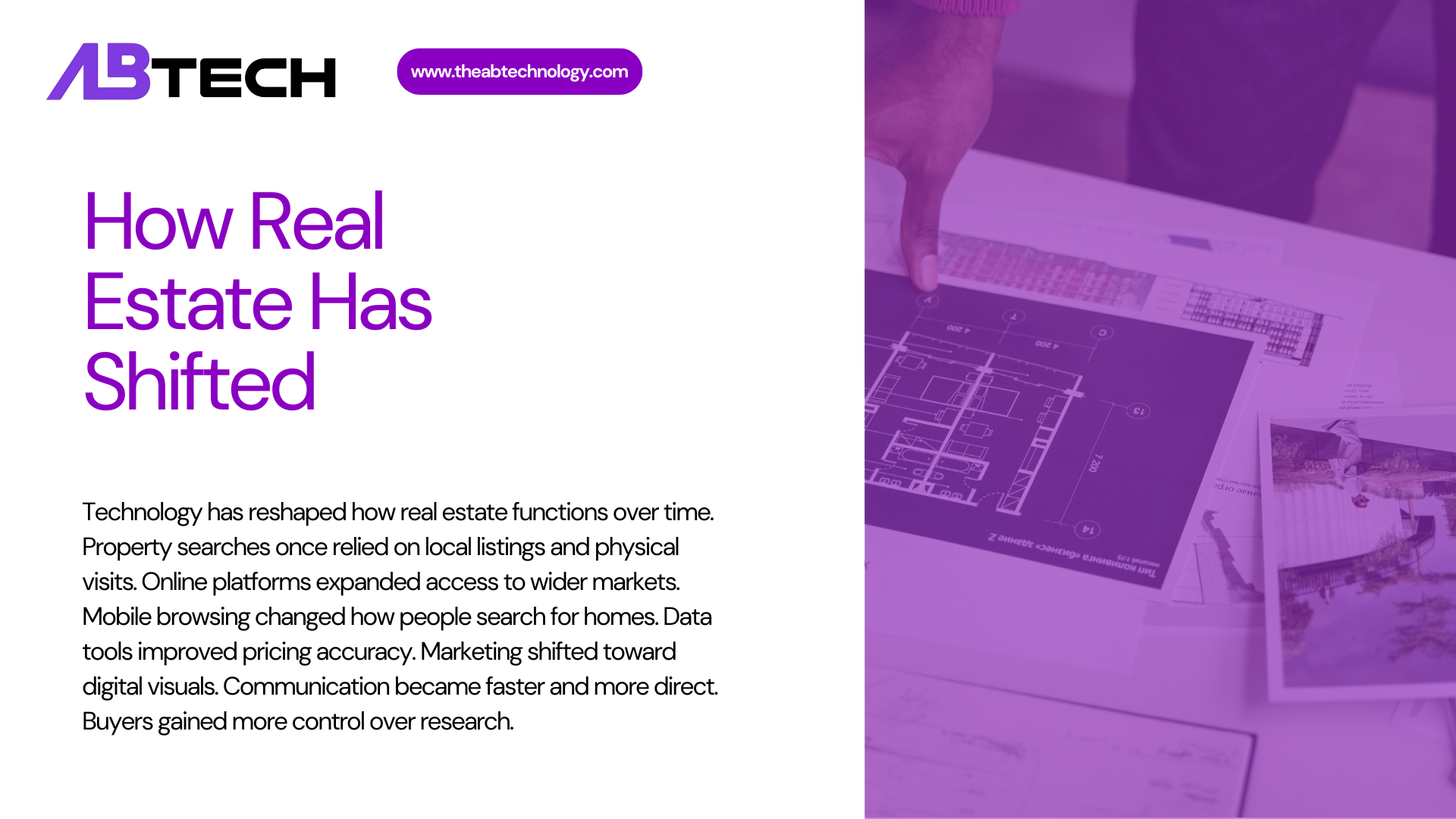
Technology has reshaped how real estate functions over time. Property searches once relied on local listings and physical visits. Online platforms expanded access to wider markets. Mobile browsing changed how people search for homes. Data tools improved pricing accuracy. Marketing shifted toward digital visuals. Communication became faster and more direct. Buyers gained more control over research. Sellers reached broader audiences with less effort. Agents adapted to new workflows. Market analysis became more precise. Property exposure increased beyond geographic limits. These shifts continue to shape industry habits.
Growth Of Property Platforms
Digital property platforms changed how listings reach buyers. Online access replaced printed listings. Mobile browsing made searching more flexible. Filters help narrow choices quickly. Photos and videos improve understanding of space. Buyers compare options without pressure. Sellers update listings in real time. Market reach expanded beyond local buyers. Data insights show listing performance. Feedback arrives faster than before. Property discovery feels more accessible. These platforms now shape buyer behavior.
Smarter Market Insights
Data analysis improved how market trends are understood. Pricing tools reflect recent activity. Demand patterns become easier to spot. Location trends gain clarity through data sets. Agents adjust strategies based on insights. Buyers gain confidence in pricing decisions. Sellers understand timing better. Market forecasts rely on past behavior. Reports update more frequently than before. Data reduces reliance on guesswork. Decisions feel more grounded in facts. Market awareness continues to grow.
Using Tech In Real Estate
Technology supports daily work for agents and investors alike. Digital tools help manage time and tasks. Online exposure supports stronger lead flow. Automation reduces repetitive work. Data tracking supports smarter decisions. Marketing tools reach specific audiences. Virtual access saves travel time. Communication systems support client follow-ups. Investors track performance with digital records. Property management tasks feel more organized. Tech supports both small and large operations. Daily workflows depend on these systems.
Virtual Tours And Staging
Virtual tours allow buyers to view properties remotely. Photos and videos show layout and flow. Digital staging helps visualize potential. Buyers screen options before visiting. Sellers attract interest from distant buyers. Time savings benefit all parties. Virtual access reduces scheduling conflicts. Listings gain attention faster. Buyers revisit tours as needed. Visual clarity supports a stronger interest. These tools support modern browsing habits. Virtual viewing feels natural today.
Automated Lead Follow-Up
Automation supports consistent communication with prospects. Contact records stay organized. Follow-ups occur on schedule. Messages reach leads without delays. Activity tracking shows engagement levels. Agents manage larger contact lists. Prospects receive timely information. No lead slips through unnoticed. Systems reduce manual effort. Consistency improves response rates. Lead nurturing feels more structured. Automation supports long-term relationships.
Social Media And Ads
Social platforms support targeted property promotion. Ads reach specific audiences based on interest. Visual content attracts attention quickly. Listings gain exposure beyond websites. Engagement shows buyer interest. Messaging tools support quick replies. Analytics track ad performance. Budget control supports efficient spending. Local and remote buyers see listings. Content sharing boosts visibility. Social presence supports brand awareness. Digital promotion plays a key role.
What Comes Next
The future of real estate continues to be closely connected with technology. New tools shape how tasks are handled. Data use grows more detailed. Transactions move toward greater transparency. Digital ownership records gain attention. Virtual environments create new property concepts. Automation handles more routine work. Buyer behavior continues to shift online. Professionals adapt to new systems. Property access expands beyond physical limits. Trust depends on secure digital processes. The industry keeps adjusting to these changes.
Artificial Intelligence Tasks
Artificial intelligence supports routine real estate work. Data sorting becomes faster. Listing suggestions match buyer interest. Chat tools answer basic questions. Pricing models adjust with market changes. Document review takes less time. Predictive insights support planning. AI reduces manual workload. Response times improve. Agents focus on client needs. Task management feels smoother. AI plays a growing support role.
Blockchain And Contracts
Blockchain supports secure record-keeping. Transactions gain clearer tracking. Digital contracts reduce paperwork. Ownership records stay transparent. Verification processes improve trust. Payment tracking becomes simpler. Fraud risk decreases through records. Data remains consistent across parties. Closing steps feel more direct. Security supports buyer confidence. Records remain accessible over time. This approach gains attention.
Virtual Property Spaces
Virtual environments create new property concepts. Digital land ownership gains interest. Virtual tours expand into interactive spaces. Investors explore digital assets. Property marketing experiments with virtual settings. Online spaces support events and showings. Ownership models continue to develop. Interest grows among tech-focused buyers. Real estate extends beyond physical limits. Virtual presence adds new value ideas. This space continues to grow. The future includes both digital and physical property.